If you don’t know how to manage drayage well, things can go wrong fast. Your shipment takes longer, and you may end up spending more time and money than you planned. So it’s important to understand what drayage is.
It is widely used in North American and global container shipping systems. In this guide, you’ll learn everything about drayage.
What Is Drayage in Shipping and Logistics?
According to the Intermodal Association of North America (IANA), drayage refers to the movement of containers over short distances within intermodal transportation networks.
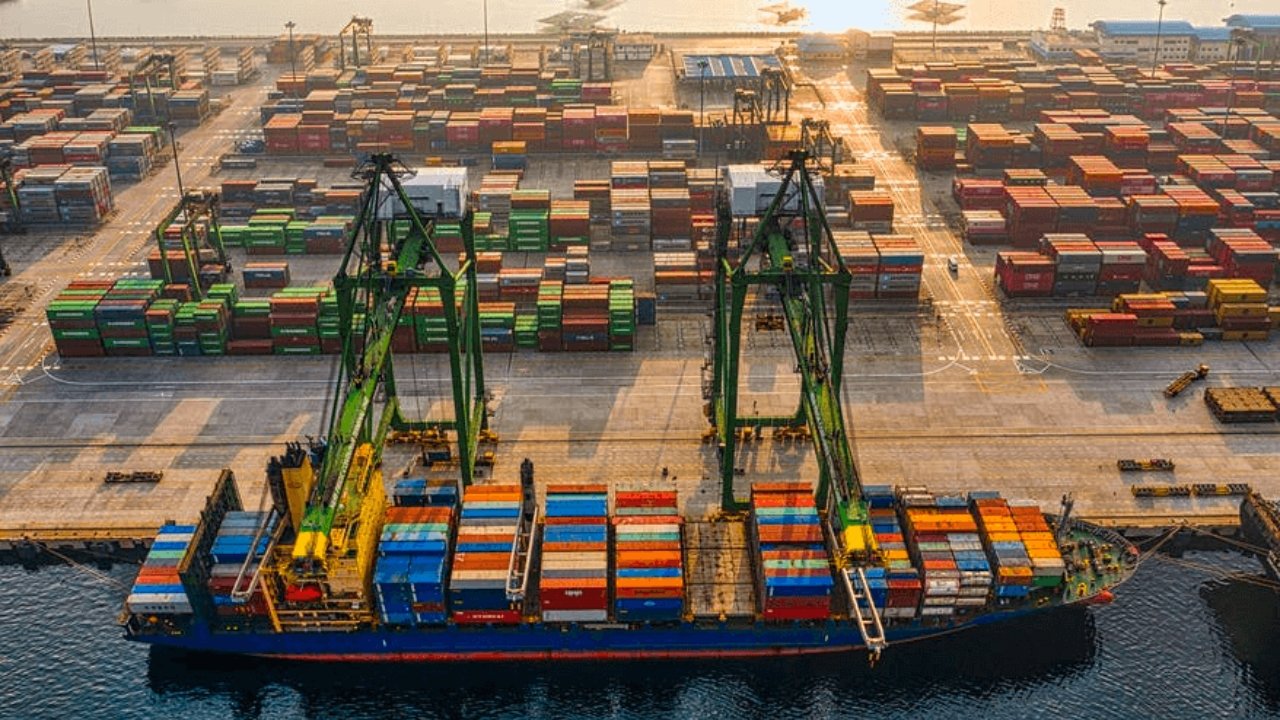
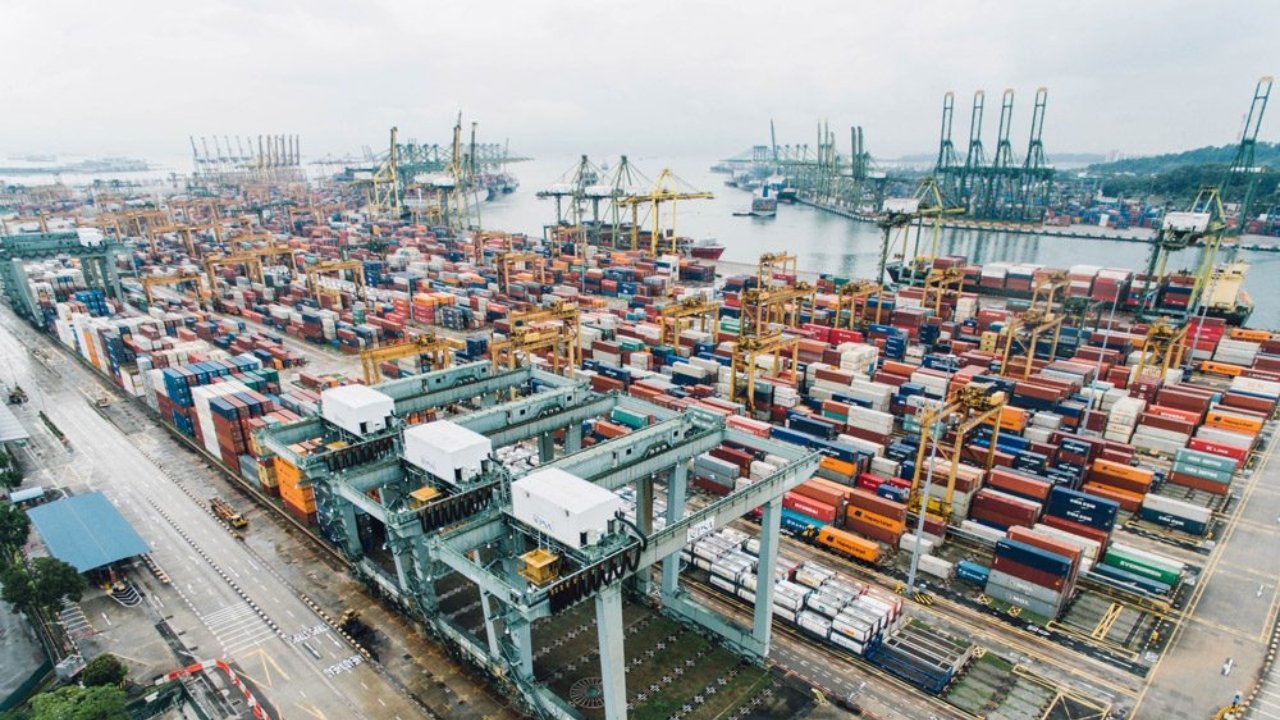
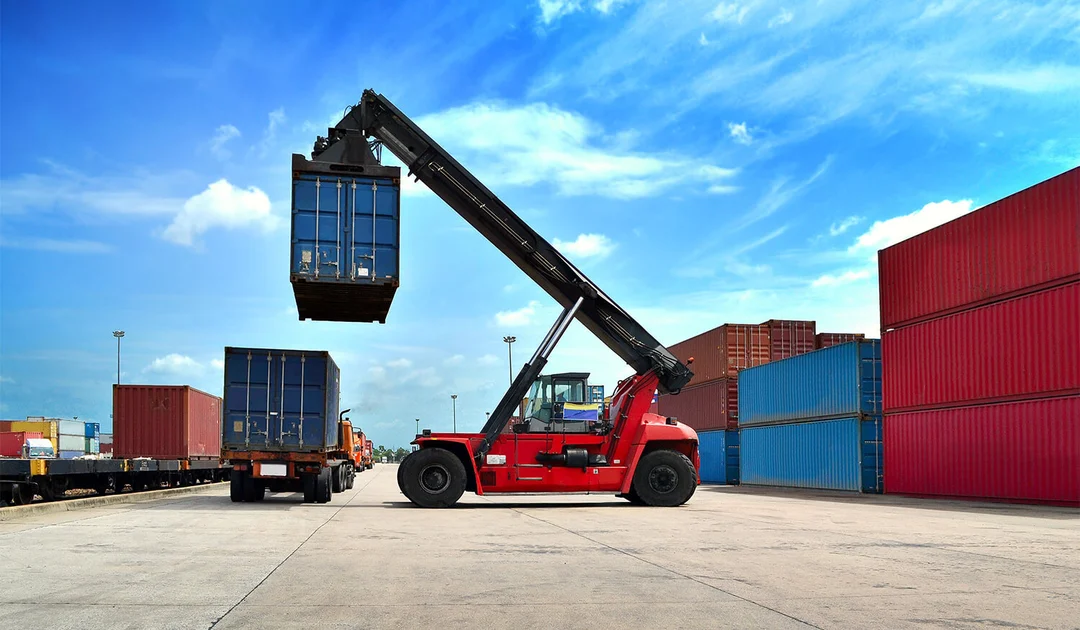
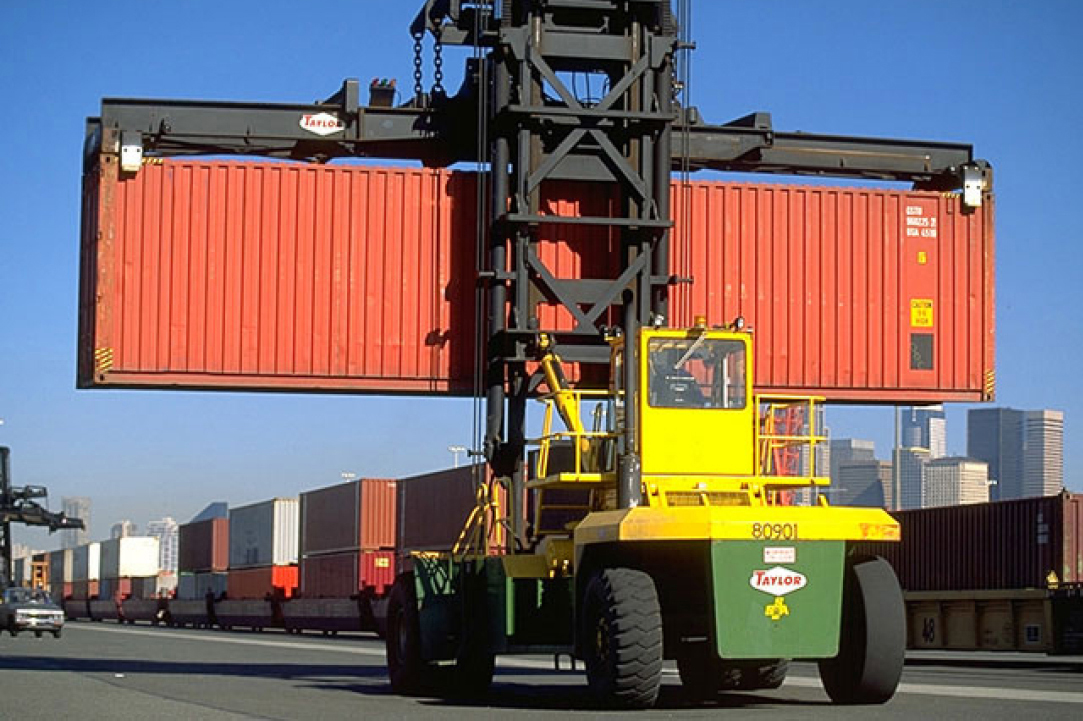
The drayage meaning in shipping refers to moving containers over a short distance during a longer transportation journey. This often happens when cargo arrives at a seaport and needs to be delivered to a nearby warehouse, distribution center, or rail terminal.
In logistics, drayage helps connect ocean freight, rail freight, and trucking services. Although the distance is usually short, drayage plays an important role in keeping cargo moving efficiently and avoiding delays in the supply chain.
For example, after a container arrives at the Port of Los Angeles from China, a drayage truck may transport it to a nearby rail yard or warehouse before it continues to its final destination.
Why Is Drayage Important in Modern Logistics?
Even though drayage is only one part of the shipping process, it can affect the entire supply chain. A delay at this stage may impact inventory availability, delivery schedules, and overall transportation costs.
It Keeps Cargo Moving
When containers arrive at a port, they must be moved quickly to avoid congestion and storage fees. Drayage helps clear containers from ports and keeps cargo flowing through the supply chain.
It Connects Different Transportation Modes
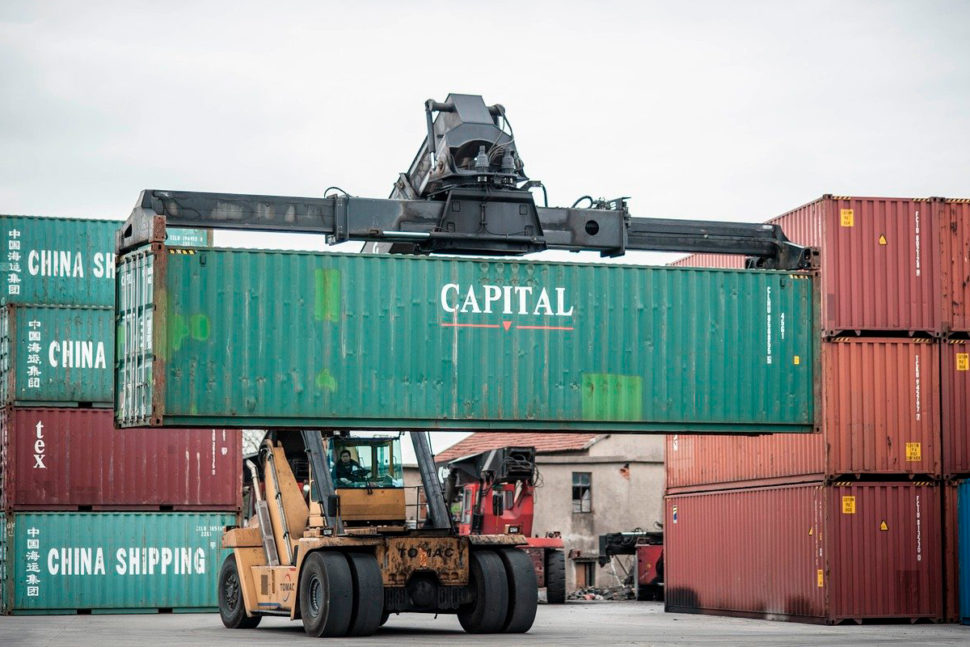
Drayage acts as the link between sea freight, rail freight, and trucking. It allows containers to move smoothly from one transportation mode to another.
How Drayage Works: Step-by-Step
If you are importing goods, drayage will begin once your container arrives at the port. Here are several steps before your cargo arrives at the final destination.
Step 1: Your Container Arrives and Clears Customs
After your vessel arrives, your container will be unloaded and placed in the terminal yard. Before it can leave the port, customs authorities must release it for transportation.

Step 2: Your Drayage Carrier Schedules Pickup
Once the container becomes available, your drayage carrier will book a pickup appointment and prepare the necessary documents.
Step 3: The Container Is Picked Up
A driver will enter the terminal, locate your container, and place it on a chassis for transportation.
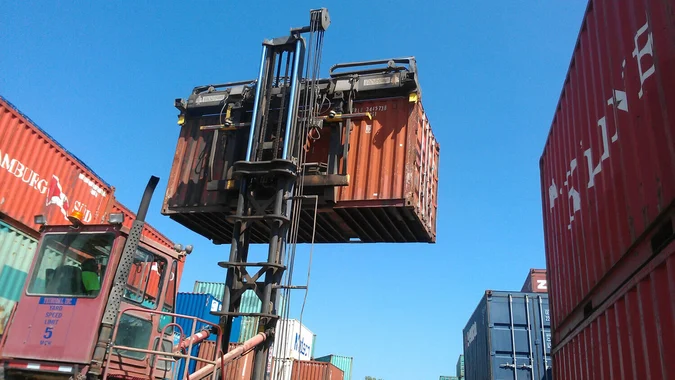
Step 4: Your Cargo Moves to the Next Destination
Step 5: The Empty Container Is Returned
After unloading, the empty container will be returned to the designated terminal or depot to avoid additional fees.
While the process above shows how a typical drayage move works, drayage can actually appear at several stages throughout an international shipment. The table below shows where drayage is commonly used:
| Shipping Stage | Drayage Needed? |
| Factory → Port | Yes |
| Ocean Freight | No |
| Port → Warehouse | Yes |
| Rail Terminal → Warehouse | Yes |
| Final Delivery | No |
What Are the Main Types of Drayage Services?
There are several types of drayage services used in shipping and logistics. Such as Port Drayage, Inter-Carrier Drayage, Door-to-Door Drayage, and so on.
Each type is designed for a different situation in the supply chain. Below are the main 9 drayage types you will usually see in international shipping.
The 6 IANA Drayage Types
- Port Drayage
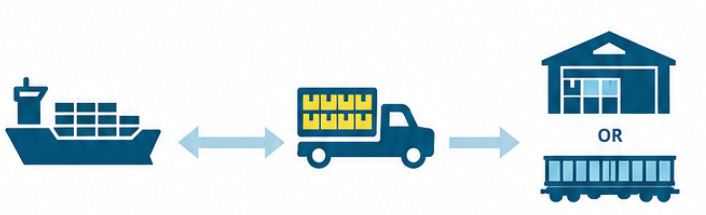
Port drayage moves your container between an ocean port and a nearby warehouse, rail terminal, or distribution center, and it is also used for returning containers back to the port for export.
- Pier Drayage
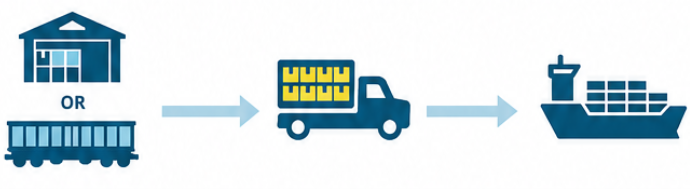
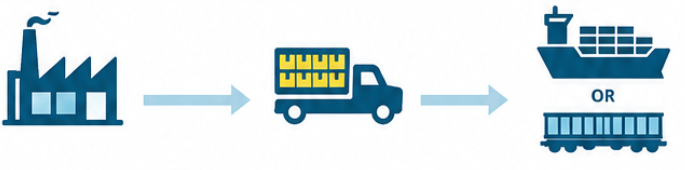
Pier drayage moves your container from a warehouse or rail terminal to the port so it can be loaded onto a vessel before the cut-off time.
- Inter-Carrier Drayage
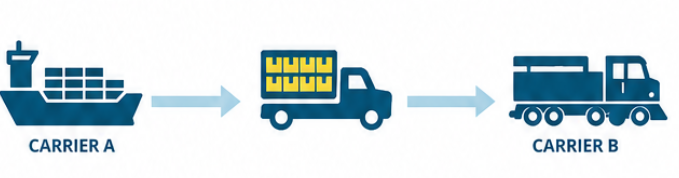
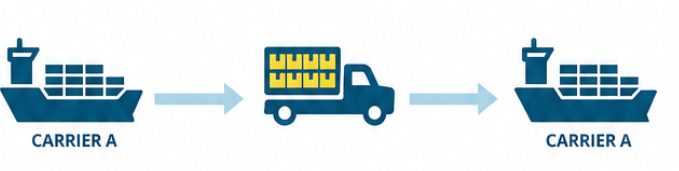
Inter-carrier drayage moves your container between two different carriers, such as different rail operators, so the shipment can continue its journey.
- Intra-Carrier Drayage
Intra-carrier drayage moves your container within the same carrier’s network between terminals or yards without changing providers.
- Shuttle Drayage
Shuttle drayage moves containers to a nearby storage yard when ports or terminals are congested and need extra space.

- Expedited Drayage
Expedited drayage is used for urgent shipments that must be delivered quickly, such as time-sensitive or perishable cargo.

Additional Types You May Also See
- Door-to-Door Drayage
Door-to-door drayage delivers your container directly from the terminal to your warehouse or business without any intermediate stops.

- Rail Drayage
Rail drayage moves your container between rail terminals and warehouses, helping complete intermodal rail shipments.

- Export Drayage
Export drayage moves your loaded container from your warehouse or factory to the port or rail terminal before the vessel departure deadline.
Drayage vs Trucking vs Intermodal Shipping vs Cartage
When you first look at logistics terms, these words can feel very similar. They are all related to moving goods, but they are used in different situations and at different stages of the supply chain.
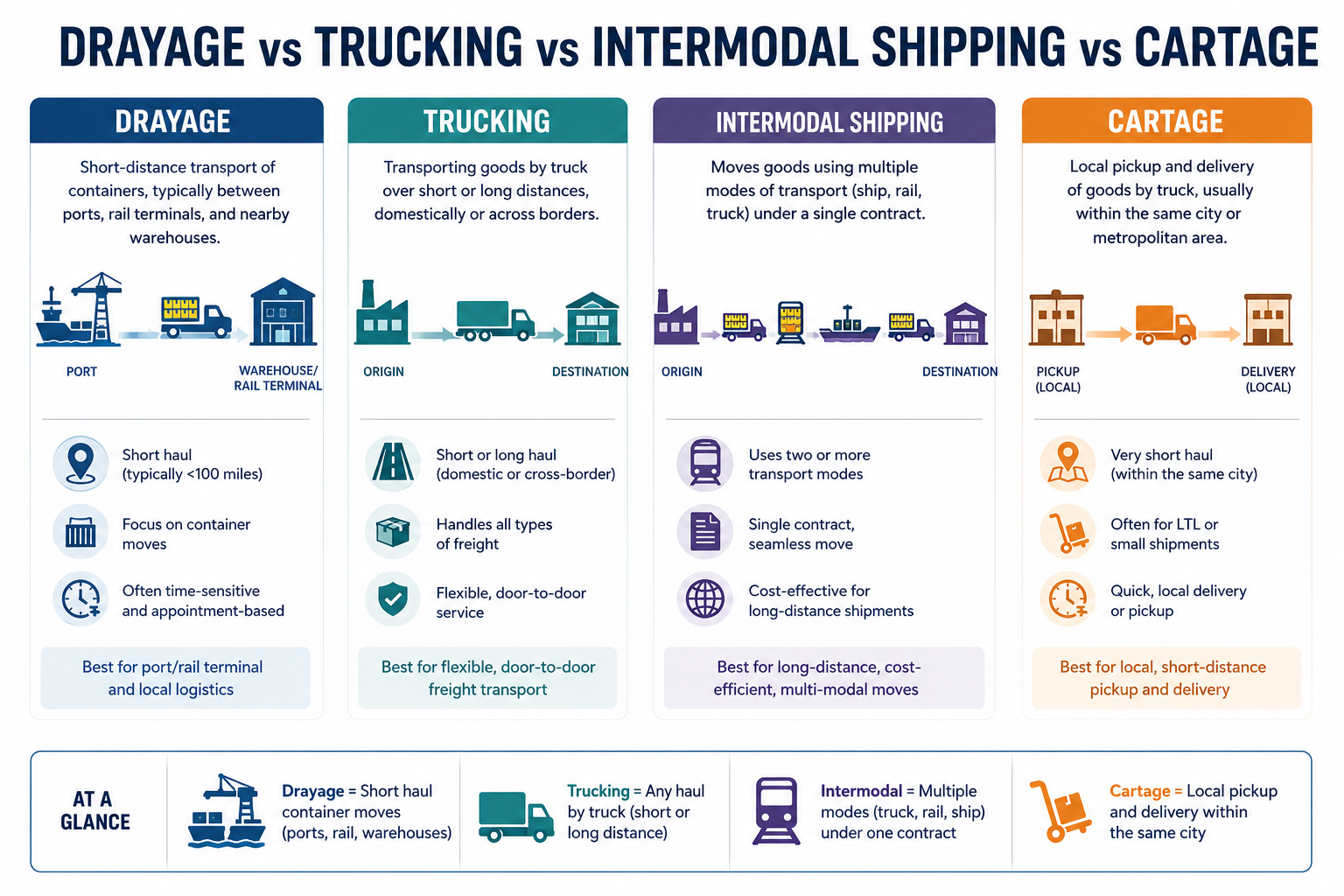
Below is a simple comparison to help you quickly understand the differences:
| Category | Drayage | Trucking (OTR) | Intermodal Shipping | Cartage |
| Distance | Short distance (local/metro area) | Long distance (500+ miles) | Medium to long distance | Short distance (local delivery) |
| Main Role | Connects ports, rail terminals, and warehouses | Point-to-point freight transportation | Moves freight using multiple transport modes | Local pickup and final delivery |
| Cargo Type | Full shipping containers | General freight and truckload cargo | Containers moved across the ship, rail, and truck | Pallets, boxes, parcels |
| Cargo Status | Usually sealed containers | Containerized or non-containerized freight | Sealed container throughout transit | Goods unloaded from containers |
| Where It Happens | Ports, rail terminals, warehouses | Highways and interstate routes | Across domestic and international networks | Local distribution areas |
| Common Users | Importers, exporters, freight forwarders | Shippers and trucking companies | Logistics providers and IMCs | Retailers and distributors |
Who Are Drayage Carriers?
A drayage carrier is responsible for the local transportation portion of a shipment and plays an important role in keeping cargo moving efficiently through the supply chain.
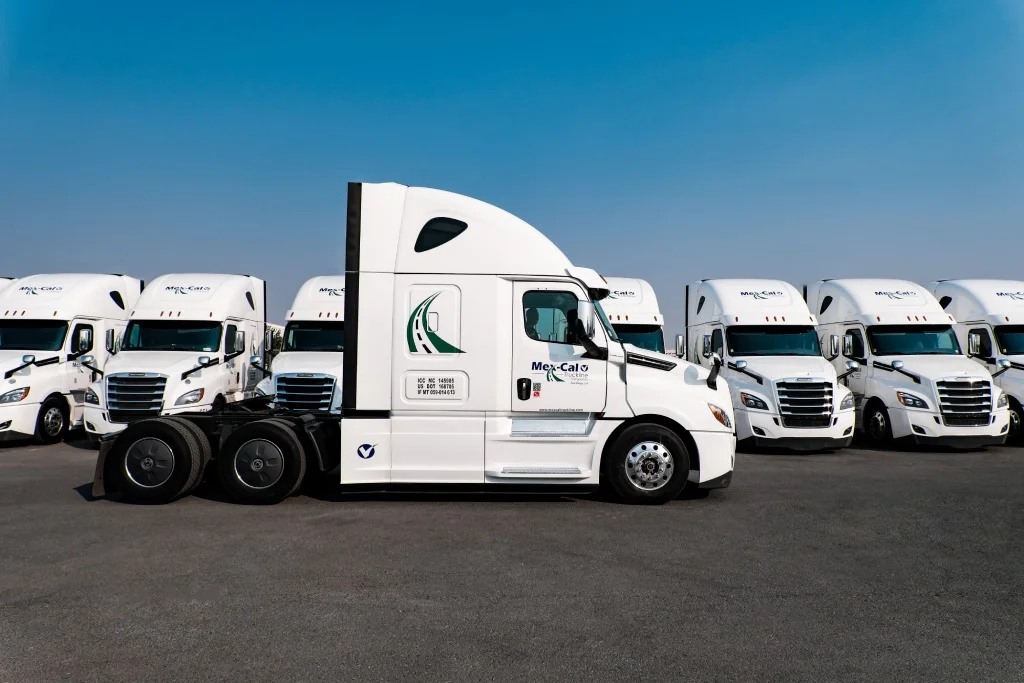
In addition to transporting containers, drayage carriers often coordinate terminal appointments, provide chassis equipment, and ensure containers are picked up and returned within the allowed free time to avoid additional fees.
Most drayage carriers operate within a specific port region and have experience navigating local terminal requirements, congestion issues, and scheduling procedures.
How You Can Book a Drayage Carrier
You can usually arrange drayage in three ways:
- Through your freight forwarder, it’s the easiest and most common route
- Through a drayage marketplace, it’s a platform like Cargomatic or Dray Alliance
- Direct booking is the best way if you have regular, high-volume lanes
How Much Does Drayage Cost?
A typical drayage move costs around $300 to $800 per container. However, the final price is often higher due to additional accessorial charges.
The table below shows typical drayage cost ranges for the most common drayage services.
Typical Drayage Costs by Service Type
| Drayage Type | Typical Cost Range* |
| Port Drayage | $300–$800 |
| Pier Drayage | $300–$900 |
| Inter-Carrier Drayage | $400–$1,000 |
| Intra-Carrier Drayage | $250–$700 |
| Shuttle Drayage | $150–$500 |
| Expedited Drayage | $500–$1,500+ |
| Door-to-Door Drayage | $500–$1,200 |
| Rail Drayage | $300–$900 |
| Export Drayage | $300–$800 |
* As a general reference only. Actual drayage costs are changed every time. It is affected by many factors. I suggest you contact your freight forwarder for the latest drayage quote.
What Factors Affect Drayage Costs?
Here are several key factors that will influence how much you pay:
| Factor | Impact on Drayage Cost |
| Distance | Longer moves from the port cost more |
| Container Size | 40ft containers are more expensive than 20ft |
| Weight | Heavy or overweight shipments may require extra handling |
| Port Congestion | Busy ports can increase delays and fees |
| Seasonal Demand | Peak seasons usually come with higher rates |
| Cargo Type | Special cargo, like hazardous or refrigerated goods, will cost more |
In addition to the base rate, you may also see other extra charges such as fuel surcharges, chassis rental fees, detention fees, and port-related costs.
For example, a drayage quote may initially appear to cost only $450 for transportation. However, once add the fuel surcharge of $150, a chassis rental fee of $120, and a detention fee of $100 if unloading takes longer than expected. As a result, you may cost $800–$900 or more.
That is why drayage becomes more expensive than you expect.
8 Ways to Reduce Drayage Costs?
You can reduce drayage costs with better timing and planning. Most high fees come from delays, poor coordination, and last-minute decisions.

Here are the most effective ways to bring your drayage costs down:
- Pick up your container within free time
- Book drayage early
Book your drayage carrier as soon as you have the vessel ETA. Early booking helps you avoid peak season delays and higher last-minute rates.
- Consolidate shipments
Combine smaller shipments into fewer containers when possible. This reduces the number of drayage moves and lowers overall transport cost.
- Choose a nearby warehouse
The closer your warehouse is to the port, the lower your drayage cost.
- Avoid peak congestion times
Avoid busy port time slots like Monday mornings or Friday afternoons. Mid-week pickups are usually faster and more cost-efficient.
- Prepare your warehouse in advance
Make sure your warehouse is ready before the container arrives. Fast unloading helps you avoid detention fees caused by driver waiting time.
- Use asset-based carriers
Asset-based carriers own their trucks and chassis, which helps reduce delays and improve equipment availability during peak seasons.
- Work with experienced forwarders
Freight forwarders or 3PLs with strong carrier networks can help you get better rates and faster bookings, especially in busy ports.
How to Choose a Reliable Drayage Provider?
If a provider has strong port experience, stable equipment access, and clear pricing, they are usually a safe choice.
A good provider keeps your container moving on time and reduces unnecessary shipping risks:
- Check port experience
Choose a provider that already operates in your target port. Local experience helps reduce delays, missed appointments, and terminal access issues.
- Look at equipment availability
Reliable providers should have stable access to trucks and chassis. This helps avoid delays during peak seasons when equipment is limited.
- Compare pricing transparency
Make sure the drayage cost breakdown is clear. Hidden fees like chassis rental or detention charges should always be explained in advance.
- Check communication speed
Fast response and clear updates are important. Good providers will keep you informed about pickup times, delays, and port conditions.
If you are still not sure how to evaluate drayage carriers, working with an experienced freight forwarder can help reduce risk and simplify coordination.
FAQs About Drayage
Q1. What Is a Pre-Pull in Drayage?
A pre-pull in Drayage is when your drayage carrier picks up your container from the port early and stores it at a nearby yard before your final delivery appointment. It is a smart move if your port is congested or your warehouse is not ready yet. It helps you avoid demurrage fees and provides you with more flexibility in timing.
Q2. What Is a Drop Fee in Drayage?
The drop fee is charged when your driver drops the container at your facility and leaves without waiting for it to be unloaded. Because the driver has to come back later to collect the empty, you get billed for that second trip. It is worth knowing about before you agree to a delivery schedule.
Q3. Do I Need Drayage for Every International Shipment?
In most cases, yes. Almost every ocean freight shipment involves some form of drayage at some point. Whether your container needs to move from the port to the warehouse or from a rail terminal to the distribution centre, you will need a drayage truck to complete that short leg.
Q4. What is intermodal transportation?
Intermodal transportation is a shipping method that uses more than one type of transport to move your cargo from origin to destination. For example, your goods might be transported by ship across the ocean, then by rail inland, and finally by truck to your warehouse.
Q5.Why Are Demurrage and Per Diem Charges So Common?
Because the clock starts the moment your container arrives at the port. Customs clearance, fully booked pickup slots, and chassis shortages can all eat up your free days before your carrier even gets through the gate. By the time everything lines up, the fees have already started. The simplest way to prevent this is to know your free time before the vessel arrives and get your drayage carrier booked as early as possible.
Final Thoughts
Understanding What is Drayage in Shipping is essential for anyone involved in international trade or logistics.
Most delays and extra charges happen during the drayage stage, especially when coordination is poor or booking is late.
That is why many importers choose to work with experienced freight forwarders like DFH Logistics to manage drayage, reduce risk, and keep shipments moving on time. Contact us today if you are looking for drayage or a reliable China Freight Forwarder when importing from China.