DHL covers more than 220 countries and regions, so it has a clear advantage for international small packages and routes to Europe. FedEx excels in delivery times on routes from China to the U.S. and other parts of North America. UPS, on the other hand, is better suited for commercial shipments and business-to-business shipping.
So when comparing DHL vs. FedEx vs. UPS, no single courier company is suitable for all international shipping needs.
Next, I’ll provide a detailed comparison of DHL, FedEx, and UPS in terms of price, transit time, route advantages, and customs clearance services. This will help you find the international shipping solution that best suits your cargo type and shipping needs.
DHL vs. FedEx vs. UPS: Quick Comparison Chart
DHL, FedEx, and UPS are all reliable options for international shipping, but different carriers are better suited for different shipping scenarios. The following is a quick comparison from the perspective of shipping from China to help you quickly find the shipping method that best suits your needs.
| Comparison Item | DHL Express | FedEx | UPS |
| Best For | International small parcels & Europe routes | USA/Canada shipments & urgent deliveries | Heavy/B2B cargo & Amazon FBA shipments |
| Dominant Regions | Europe, Asia, Middle East, Africa | North America (USA, Canada, Mexico) | North America & Western Europe |
| Shipping Speed | Fastest (2-4 days) globally | 2-3 days via IP (Priority); 4-6 days via IE (Economy) | 3-5 days (Highly stable for commercial lines) |
| Best Weight Range | 0.5 kg – 21 kg (Most cost-effective for small goods) | 100 kg – 300 kg (Massive discounts for medium-heavy freight) | 300+ kg & Pallets (Unbeatable rates for heavy cargo & bulk FBA) |
| Tracking Accuracy | Excellent (Real-time milestone updates) | High (Advanced tracing for North American routes) | Enterprise-Level (Deepest end-to-end milestone details) |
| Customs Advantage | Best for EU customs and strict clearance countries | Flawless handling for US Customs (CBP) | Strong commercial brokerage for B2B/FBA cargo |
DHL vs FedEx vs UPS: Core Strengths of Each Carrier
1. DHL Express
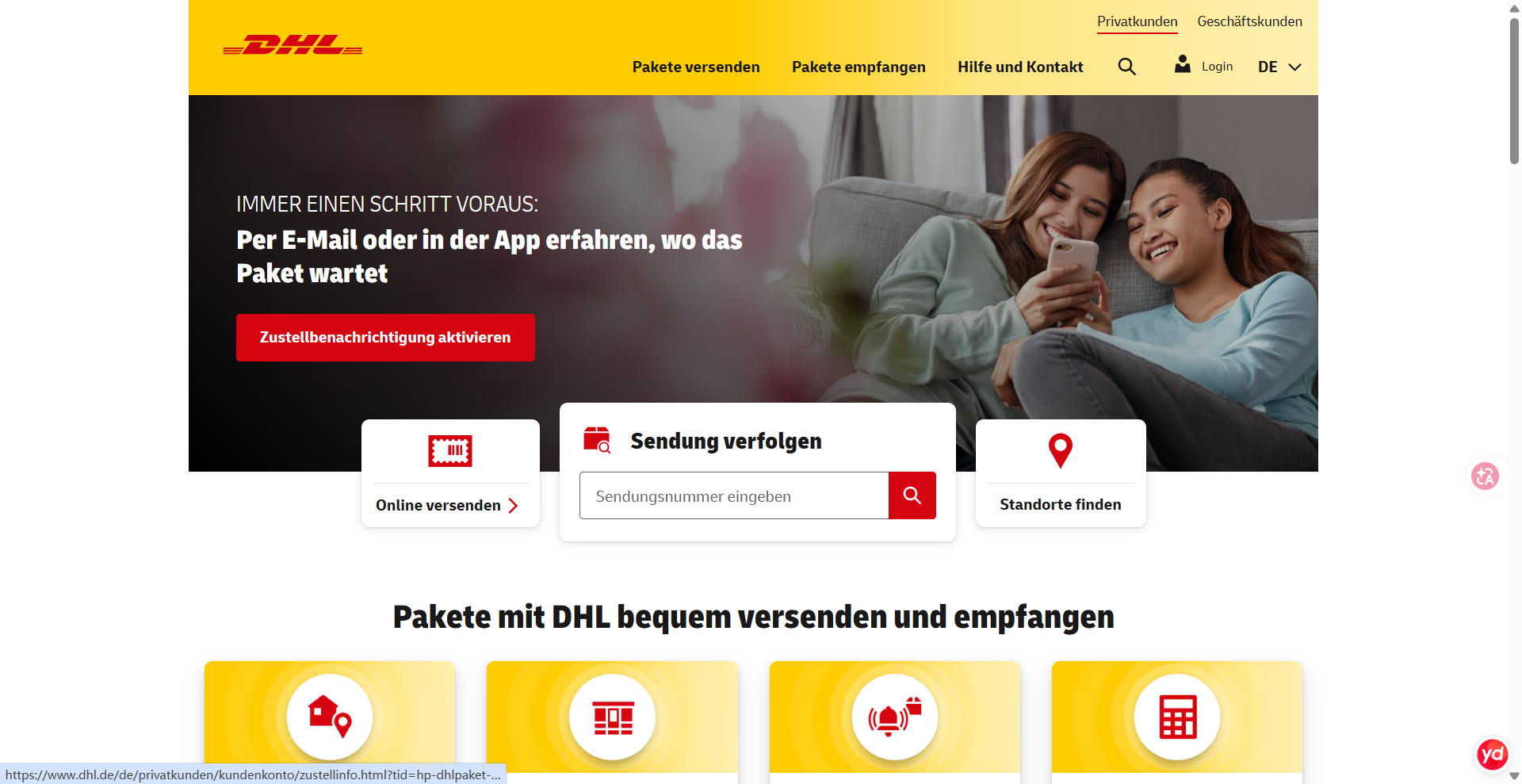
If you’re shipping goods to Europe, the Middle East, or Africa, DHL is the top choice. It is majority-owned by Deutsche Post (DPD) and has an exceptionally strong presence in Europe.
Based on my 13 years of experience in the logistics industry, DHL stands out in terms of delivery times and customs clearance capabilities.
If you’re shipping from China, DHL’s greatest strengths are “reliability and speed”. Especially for small packages weighing less than 21 kg, documents, or urgent samples, it offers the most granular pricing tiers and can generally guarantee delivery worldwide within 2–4 days.
Advantages:
- Absolute Dominance in Europe and the Middle East: The fastest transit times to Europe, the UK, the Middle East, and Africa.
- Extremely Competitive Rates for Small Shipments: For lightweight packages and samples under 21 kg, it offers the most cost-effective official base rates.
- Highly Flexible Hong Kong Routes: DHL’s Hong Kong routes allow for the safe shipment of sensitive goods such as items with built-in batteries (e.g., cell phones, Bluetooth headphones) with minimal restrictions.
- Extremely Efficient Customs Clearance: Customs clearance procedures are typically completed in advance while the shipment is still in the air, before it even lands.
Disadvantages:
- Prices for large shipments to North America are relatively high: For large shipments weighing over 100 kg destined for the U.S. or Canada, the unit price per kilogram is typically significantly higher than that of FedEx and UPS.
- Hefty surcharges for overweight or oversized packages: There are strict weight and size limits for individual packages. If a package is overweight (e.g., over 70 kg) or oversized, the surcharges are very high.
- High delivery fees for remote areas: If your delivery address is in a mountain village or on a remote island, DHL charges a high Remote Area Surcharge.
Best For:
- Destination: Throughout Europe (Germany, France, Italy, the UK, etc.), the Middle East, and Africa.
- Shipment Types: High-value commercial samples, urgent critical components, and small packages weighing less than 21 kg.
- Special Requirements: Orders with extremely tight time constraints that must be delivered within 3 days, or orders where the recipient has limited customs clearance capabilities.
2. FedEx
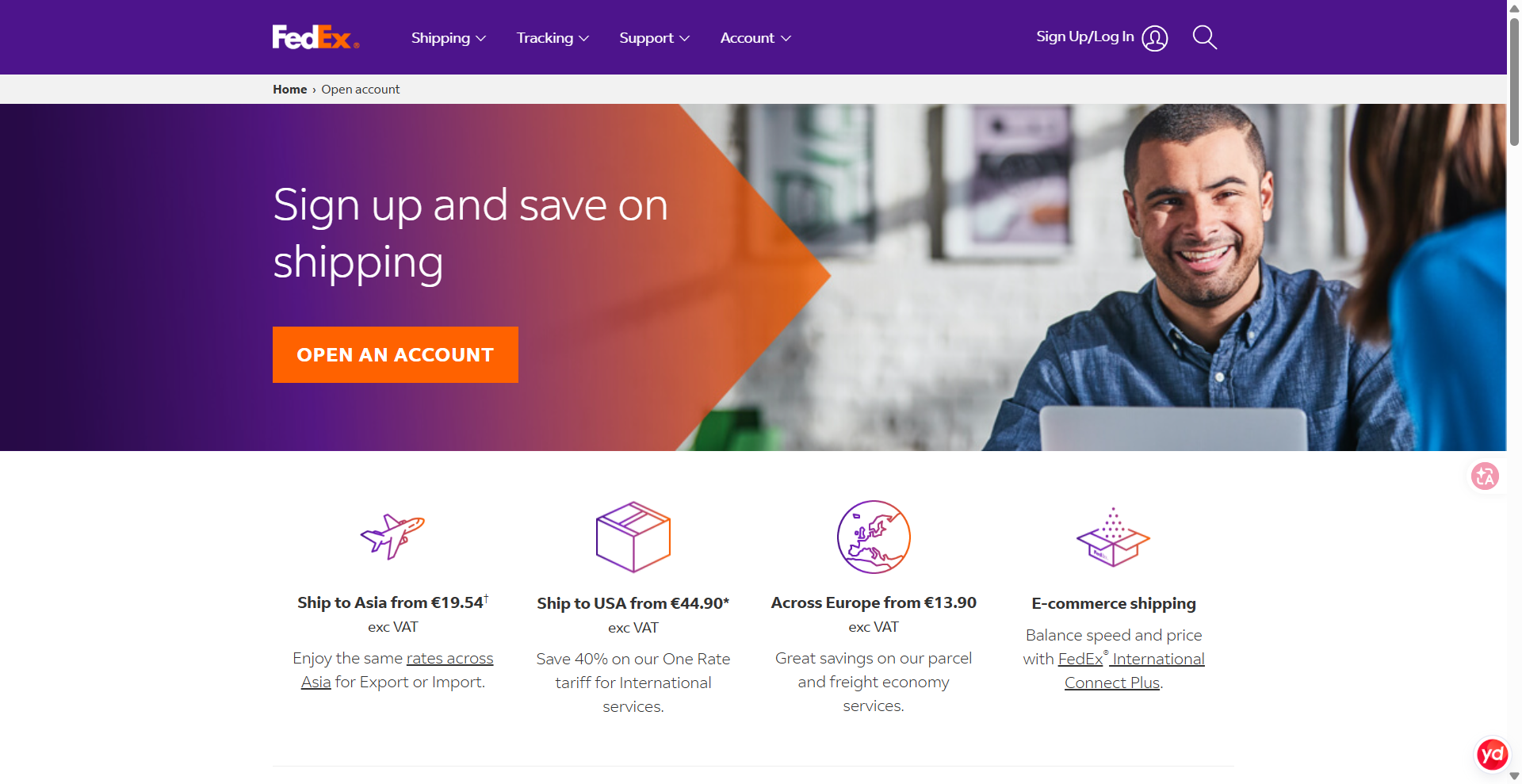
If DHL dominates Europe, then the Americas are FedEx’s home turf. As a logistics giant that originated in the United States, FedEx boasts an unrivaled network of air hubs and ground delivery networks across North America (the United States, Canada, and Mexico) and South America.
FedEx is the most commonly used shipping channel for Chinese cross-border e-commerce sellers and export-oriented manufacturers targeting the U.S. market. Its biggest strength is striking an excellent balance between “speed” and “price”.
Advantages:
- Comprehensive North American Network: Delivery times to the U.S. and Canada are extremely consistent, with particularly fast customs clearance and last-mile delivery.
- Precise Service Tiering: Offers International Priority (IP, 2–3 days) and International Economy (IE, 4–6 days), allowing for flexible switching based on your budget.
- Excellent Value for Large Shipments: For shipments weighing 21 kg or more, especially those between 100 kg and 300 kg, FedEx offers very substantial discounts to the Chinese market. Shipping rates are much more cost-effective than DHL’s.
- The Ultimate Solution for Restocking via Ocean Freight to the U.S. West Coast: When Amazon sellers face stockout crises and ocean freight is too slow, FedEx IP is practically the only lifeline.
Disadvantages:
- Customs clearance is slightly less efficient in some parts of Western Europe: In certain non-core European countries or small inland towns, the efficiency and delivery speed of FedEx’s in-house customs clearance team are not as good as DHL’s.
- Fuel surcharges fluctuate frequently: FedEx’s fuel surcharges are directly linked to the U.S. aviation fuel index, so they fluctuate significantly. Sometimes, the final bill may be higher than expected.
- Strict Residential Delivery Charges: If your delivery address is a private residence in the U.S. rather than a business, FedEx strictly applies a Residential Delivery Charge.
Best For:
- Destinations: The United States, Canada, Mexico, and Latin America.
- Shipment Types: Bulk replenishment of large/medium clothing items, consumer electronics, and cross-border e-commerce (Amazon, independent websites).
- Special Needs: Businesses with limited budgets that cannot use ocean freight, need to balance cost and transit time, or require flexible options for “express/standard” shipping.
3. UPS

FedEx and UPS are both long-established giants in the U.S. While FedEx is known for flexible small parcel and economy shipping options, UPS has built a strong advantage in industrial B2B shipments and larger e-commerce orders.
If my client’s individual shipment weighs more than 21 kg, or even reaches several hundred kilograms, or is destined for Amazon FBA warehouses in the U.S. or Europe, I generally recommend UPS first.
Advantages:
- Most Cost-Effective for Large and Heavy Shipments: For shipments in the 70 kg, 100 kg, or even over 300 kg weight brackets, UPS’s per-kilogram rate discounts are typically extremely competitive.
- Amazon FBA “Fast Track”: Amazon fulfillment centers in Europe and the U.S. highly trust UPS. When shipments arrive at FBA centers, they often do not need to wait in line or make appointments like regular freight forwarder trucks do. Instead, they are scanned directly into the warehouse.
- Extremely Accurate Tracking: UPS’s system technology is exceptionally robust. Information updates from origin to transit, customs clearance, and every scanning point are extremely timely.
- Extremely Punctual Deliveries to Business Addresses: In the business districts of major cities across Europe and the U.S., UPS’s iconic brown trucks boast an extremely high delivery frequency and on-time rate.
Disadvantages:
- Weak on small packages: For small packages weighing less than 21 kg, UPS generally can’t compete with DHL in terms of price and delivery time.
- More Additional Fees: UPS has stricter packaging and weight requirements compared with some carriers. Oversized packages, improper packaging, or overweight shipments may result in extra handling fees.
- Customer Service Efficiency: UPS customer support may be less efficient for individual customers handling complex shipment issues. So working with a freight forwarder like DFH Logistics can provide faster communication and better shipment assistance.
Best For:
- Destinations: Traditional business addresses and industrial zones in the U.S., Canada, and Europe.
- Cargo Types: Bulky shipments weighing 21 kg or more, heavy industrial components, automotive parts, and large traditional B2B trade orders.
- Special Requirements: Cross-border e-commerce sellers who need to urgently restock large quantities to Amazon FBA fulfillment centers (such as ONT8 and LAS7 in the U.S. West Coast) or require extremely precise end-to-end tracking of their shipments.
DHL vs FedEx vs UPS Prices: Which Is the Cheapest?
When shipping from China, which of DHL, FedEx, or UPS is cheaper depends entirely on the weight bracket and destination of the shipment.
For small shipments and samples weighing less than 21 kg, DHL is the top choice. For medium-to-heavy shipments weighing 100–300 kg, FedEx is the top choice. And for heavy shipments weighing over 300 kg and large palletized orders, UPS is undoubtedly the best choice.
| Weight Tier | Estimated Rate | Cheapest Option | DFH Logistics Insider Tip |
| 0.5 kg – 21 kg | $8 – $32/kg | DHL Express | DHL is highly competitive for small shipments, especially to Europe and Asia. |
| 21 kg – 100 kg | $6 – $25/kg | FedEx / DHL | FedEx is usually better for North America, while DHL remains strong for Europe and the UK. |
| 100 kg – 300 kg | $5 – $18/kg | FedEx | FedEx often offers competitive rates for larger shipments, especially to the US and Canada. |
| 300+ kg & Pallets | $5 – $15/kg | UPS | UPS is a strong choice for heavy B2B cargo and Amazon FBA shipments with reliable final delivery. |
| Note: The rates above are estimated market ranges for reference only. Actual shipping costs vary depending on destination, package size, product type, and shipping channel. You can contact us for the latest quotation. | |||
Factors That Affect DHL vs FedEx vs UPS Cost
1. Package Weight
Generally, the heavier the package, the lower the price per kilogram. As shown in the table above, DHL is better suited for small packages, while FedEx and UPS may offer better pricing for medium and large shipments.
2. Dimensional Weight Trap
Courier companies don’t just consider the actual weight on the scale, but also factor in how much space the box takes up.
The formula for international shipments across the three major carriers is standardized as: Length (cm) × Width (cm) × Height (cm) ÷ 5000.
If the calculated dimensional weight exceeds the actual weight, the shipment will be charged based on the dimensional weight. For example, shipping a box of bulky cotton, even if it actually weighs only 5 kg, it might be billed as 30 kg.
3.Destination & Shipping Zones
For shipments from China, FedEx and UPS have a strong advantage in North America thanks to their extensive air and ground networks. Meanwhile, DHL’s global network often provides better value for shipments to Europe and the Middle East.
FedEx vs DHL vs UPS Speed: Which Is the Fastest?
When shipping from China, DHL is usually the fastest option for Europe, the Middle East, and Southeast Asia. Delivery times are typically around 2–4 days. For North America routes, FedEx International Priority and UPS often provide faster delivery, usually within 3–5 days.
Although all three major carriers offer top-tier express delivery services, their delivery speeds vary by destination due to differences in flight routes and ground delivery networks.
| Shipping Route | Recommended Carrier | Estimated Delivery Time |
| China to USA | FedEx / UPS | 3–5 days |
| China to Europe | DHL | 3–5 days |
| China to UK | DHL / UPS | 3–5 days |
| China to Canada | FedEx / UPS | 3–5 days |
| China to Australia | DHL / FedEx | 3–5 days |
| China to UAE | DHL / UPS | 2–4 days |
| China to South Africa | DHL | 5–7 days |
| China to Singapore | DHL / FedEx | 2–4 days |
| China to Philippines | DHL / UPS | 2–4 days |
| China to Thailand | DHL / FedEx | 2–4 days |
It is important to note that the transit times listed in the table above are based on standard, normal shipping conditions. In actual international logistics, the final delivery time is not fixed, It is also subject to the following key factors:
- Service Level Options: Every carrier offers both express and standard options. For example, FedEx’s IP Priority vs. IE Economy, or UPS’s Worldwide Express vs. Expedited. Delivery times can vary by 2–4 days.
- Customs Clearance Efficiency: If export customs documentation is incomplete, if the shipment undergoes a routine customs inspection, or if special categories require additional certification, delays at customs will directly slow down the overall delivery time.
- Origin Network (Mainland China vs. Hong Kong): Direct flights from mainland China (e.g., Shenzhen, Guangzhou, Shanghai) are typically faster than arranging truck transport to Hong Kong International Airport for departure. This can save 1–2 days.
- Final Delivery Address: For remote mountainous areas, private residences, or islands, final delivery usually requires an additional 1–2 business days.
DHL vs FedEx vs UPS Coverage: Who Has Better Global Reach?
Although DHL, FedEx, and UPS all cover more than 220 countries and regions worldwide, each company’s network strengths vary by region.
If you need to ship from China, choosing the right carrier for the destination can result in more reliable transit times, more reasonable rates, and smoother last-mile delivery.
1. DHL
Covered Regions: All of Europe (Western Europe, Eastern Europe, the UK), the Middle East, the Asia-Pacific region (Southeast Asia, Japan, South Korea), and most countries in Africa.
My Practical Insights: DHL’s strongest market is Europe, where it has a leading position in both Europe and the Middle East. Whether shipments are delivered to busy commercial areas in Paris, remote towns in Germany, or even smaller cities in Africa, DHL can provide reliable last-mile delivery through its extensive air hubs and local transportation network.
If your primary market is Europe or the Middle East, DHL is often the top choice.
2. FedEx
Covered Regions: North America (the US, Canada), Latin America (Mexico, Brazil, Chile, and other South American countries), and core Asia-Pacific trade routes.
My Practical Insights: The Americas are FedEx’s strongest market. Its major air hub in Memphis, Tennessee, handles a large volume of shipments from Asia every day. FedEx also has extensive ground delivery coverage across North and South America.
If your shipments are from China to the U.S. West Coast, East Coast, or Latin America, FedEx offers frequent flights, efficient transfers, and competitive rates for larger shipments.
3. UPS
Covered Regions: The entire United States, Canada, major Western European economies (Germany, France, the United Kingdom, etc.), and major industrial and commercial regions worldwide.
My Practical Insights: UPS’s core advantage lies in its strong presence in major business areas. Its well-established ground delivery network provides frequent and reliable services across commercial centers and industrial zones in the U.S. and Western Europe.
For cross-border e-commerce sellers, UPS is a preferred choice for Amazon FBA shipments because of its strong local distribution network and efficient delivery capabilities near major FBA warehouses. It is especially suitable for commercial cargo and FBA replenishment shipments.
DHL vs FedEx vs UPS Customs Clearance: Which Carrier Handles Customs Better?
As an international logistics expert with years of industry experience, I want to clarify one thing first: no courier company can guarantee that shipments will never be held by customs.
Customs authorities are independent government agencies, and the final decision on inspection or clearance always belongs to them, not the courier company.
However, due to differences in global infrastructure and local customs teams, DHL, FedEx, and UPS do have different levels of customs handling capability in different regions.
| Carrier | Top Customs Areas | Risk Zones |
| DHL | Europe, Middle East, Southeast Asia, Africa | Some Latin American countries (such as Brazil) |
| FedEx | USA, Canada, Japan | Some smaller European countries |
| UPS | North America, Western Europe business areas | Private residential shipments and countries with strict inspections |
Express Carrier vs Freight Forwarder: Which Is Better for International Shipping?
As a logistics expert at DFH Logistics, I can summarize it simply: express carriers provide standardized transportation services, while freight forwarders offer complete end-to-end supply chain solutions.
In international trade, this is one of the most common questions asked by overseas buyers and importers: Should I ship directly through DHL, FedEx, or UPS, or work with a professional freight forwarder in China? Which option is the better choice?
Although placing an order directly with a major courier company may seem more reliable, many businesses and experienced sellers shipping from China prefer to work with freight forwarders. This allows them to secure more competitive rates, more flexible solutions, and more professional support.
To help you make a more informed shipping decision, I’ve compared the key differences between courier companies and freight forwarders in the table below.
| Comparison Dimension | Express Carrier Official | Freight Forwarder (Such as DFH Logistics) |
| Pricing & Cost | Standard retail rates with limited discounts for low-volume shippers | Discounted shipping rates through carrier partnerships |
| Cargo Restrictions | Strict requirements for sensitive cargo and special products | Flexible shipping solutions for compliant special cargo |
| Customs Support | Basic customs clearance support | Pre-shipment document review and customs assistance |
| Value-Added Services | Limited services. You need to handle pickup, packing, and shipment preparation. | Pickup, warehousing, consolidation, repacking, and supplier coordination |
| Customer Care | Standard customer service with limited personal support | Dedicated account manager with proactive shipment updates |
What Is the Standard Process for Shipping from China With a Freight Forwarder?

By partnering with a professional freight forwarder, you can access one-stop logistics services ranging from pickup at factories in China, warehousing and consolidation, export customs clearance, and import customs clearance to overseas delivery.
Taking DFH Logistics as an example, we will provide one-stop international express shipping services from warehouses in China to overseas destinations.
The entire process typically involves the following steps:
Step 1: Supplier Coordination & Shipment Check
Once you’ve completed your purchase, all you need to do is provide the supplier’s information.We’ll communicate directly with the Chinese factory to confirm the quantity, weight, dimensions, and packaging of the goods.
Step 2: Domestic Pickup
Whether your supplier is located in Shenzhen, Guangzhou, Yiwu, or elsewhere, we’ll coordinate local transportation resources to safely deliver the goods to our warehouse.
Step 3: Warehousing, Consolidation & Repacking
If you source from multiple suppliers,we can consolidate goods from different suppliers at our warehouse in China.
We can provide consolidation, repacking, labeling, and warehousing services.
Step 4: China Export Customs Clearance
Before the goods are exported,we will assist in reviewing the commercial invoice, packing list, and HS Code information. This helps ensure your goods clear Chinese export customs more smoothly.
Step 5: International Express Shipping
After completing export procedures, we will select the appropriate international express shipping channel based on the destination, cargo type, and time-sensitive requirements.
Step 6: Import Customs Clearance
Once the goods arrive in the destination country, we will assist you in preparing the required documents and provide customs clearance support to help resolve any potential document issues or delays.
Step 7: Final Door-to-Door Delivery
Once customs clearance is complete, our local delivery team will handle the last-mile delivery. Goods can be delivered to your specified address, including companies, warehouses, private addresses, and Amazon FBA fulfillment centers.
FAQs About DHL vs FedEx vs UPS International Shipping
Can FedEx, UPS, and DHL handle customs clearance?
Yes, but primarily for standard express shipments. DHL, FedEx, and UPS are all global express carriers with their own customs clearance teams. They can handle routine customs procedures and submit standard clearance documentation for most shipments.
However, for complex shipments involving special products, incorrect HS codes, or incomplete documentation, a freight forwarder may be needed to provide additional support to avoid customs clearance delays.
Does a freight forwarder offer cheaper express shipping rates than official carriers?
Yes, in many cases, the express shipping rates offered by freight forwarders are significantly lower than the prices listed on the official carriers’ websites. Professional freight forwarders handle a large volume of shipments daily, so they are able to secure discounted rates through long-term partnerships with carriers.
Does the shipping price include customs duties and taxes at the destination?
Generally, no. Standard international express services typically operate under DDU or DAP terms, which means the shipping rates quoted do not include import duties, VAT, or other destination taxes and fees.
Once the shipment arrives, local customs authorities or the carrier will usually contact the recipient to arrange payment of duties and taxes prior to delivery.
If you need a one-stop solution that covers shipping, customs clearance, and import duties and taxes, you can select DDP (Delivered Duty Paid) shipping service before shipping.
What items are banned or restricted by DHL, FedEx, and UPS when shipping from China?
DHL, FedEx, and UPS impose strict restrictions on many types of goods. These include standalone lithium batteries, flammable products, liquids, powders, strong magnets, high-value jewelry, and items that infringe on intellectual property rights.
Special shipping requirements may apply to common products with built-in batteries, such as smartphones or Bluetooth headsets, or certain cosmetics.If you choose a professional freight forwarder, they can assist you in selecting compliant shipping channels and preparing the necessary documentation.
What happens if my express shipment is lost or damaged during transit from China?
If your shipment is lost or damaged during transit, DHL, FedEx, or UPS will usually provide compensation according to their carrier terms. However, the standard compensation amount may be limited and may not fully cover the value of high-priced commercial goods.
For high-value products, precision equipment, or valuable cargo, we recommend purchasing additional cargo insurance before shipping. This provides extra protection against potential loss, damage, or unforeseen shipping risks.
How Much Does International Shipping Insurance Cost?
Shipping insurance rates depend on the cargo value, product type, and coverage required. In most cases, the insurance cost is around 0.1%–0.3% of the declared cargo.
For example, if you are shipping commercial goods worth $10,000, the insurance fee would usually be around $10–$30. This small additional cost can help protect your shipment against risks such as loss, damage, or unexpected transportation accidents.
Final Thoughts
When comparing DHL vs FedEx vs UPS, there is no universal winner for every shipment. DHL is usually the best choice for small packages, urgent samples, and shipments to Europe, while FedEx offers competitive rates and reliable delivery for China-to-US shipments. UPS is often more suitable for heavy cargo, B2B shipments, and Amazon FBA deliveries.
Choosing the right carrier depends on factors such as cargo weight, destination, shipping speed, customs requirements, and budget. A professional logistics partner can help you select the most suitable shipping solution and avoid unnecessary costs or delays.
At DFH Logistics, we can help compare DHL vs FedEx vs UPS and arrange cost-effective international shipping solutions from China. You can fill out the contact form on the right, and our logistics experts will recommend the best shipping option for your cargo.