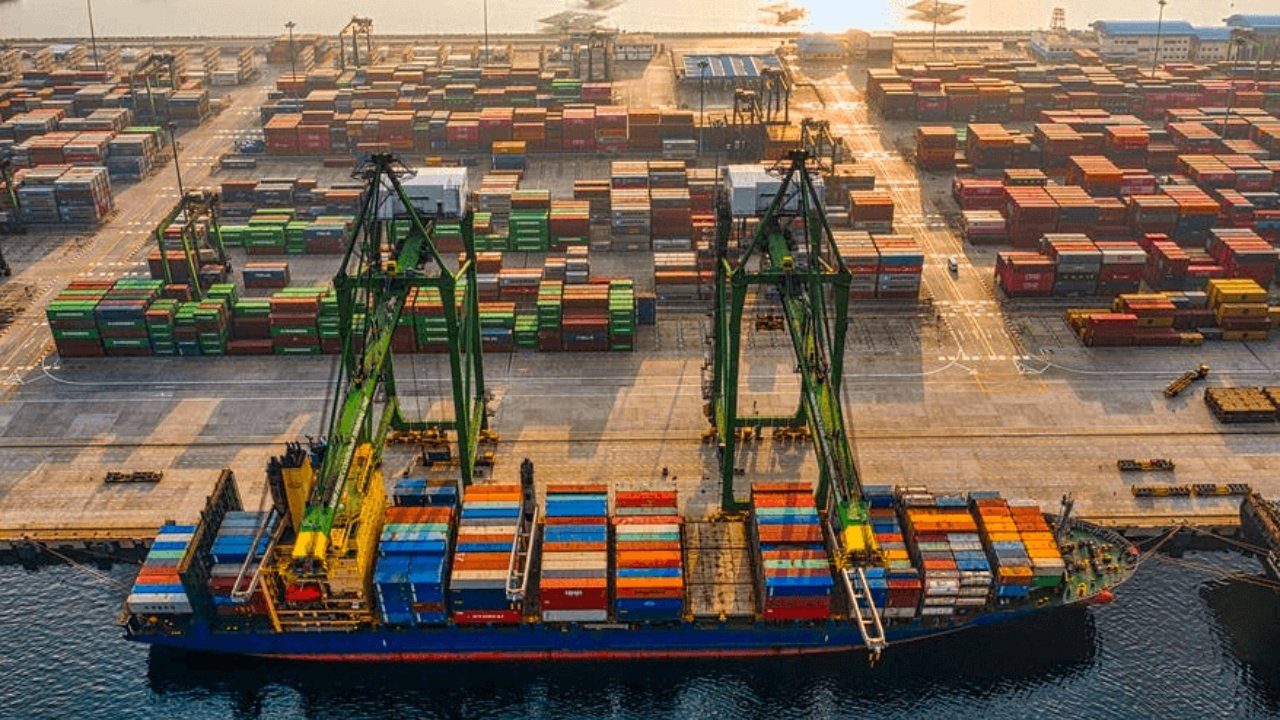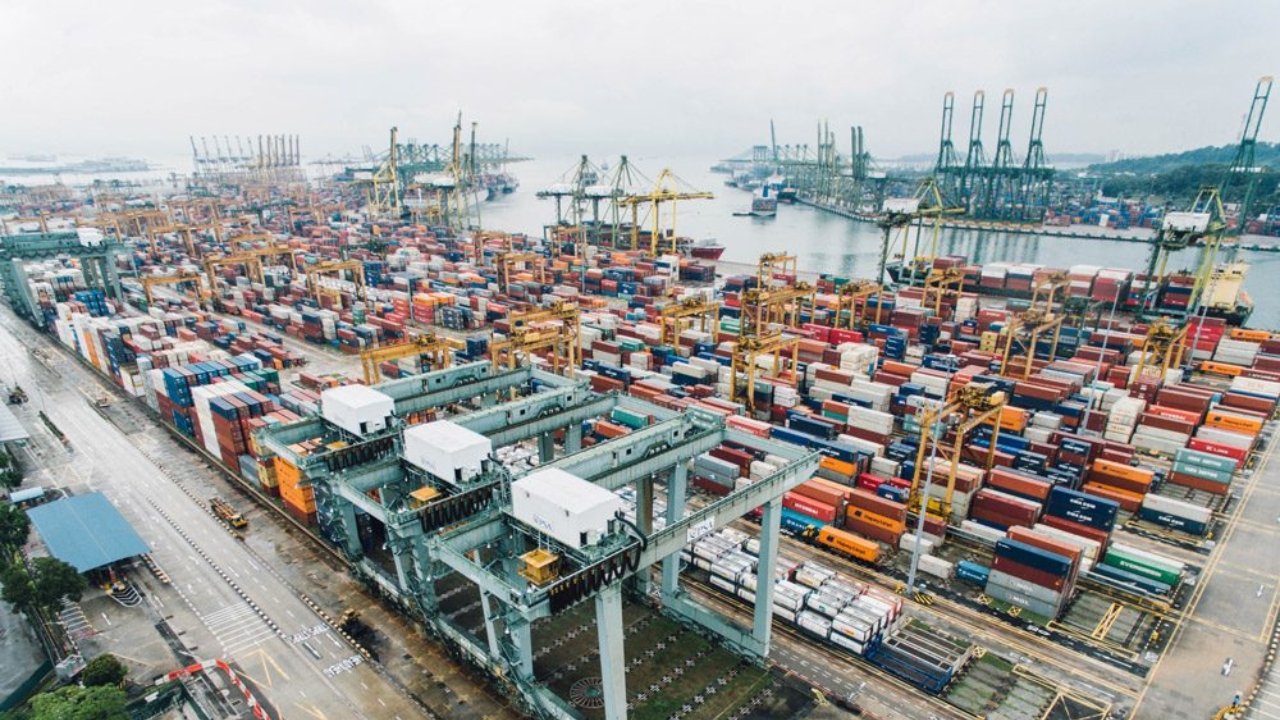
Starting a clothing shipment from China is not just a matter of finding a low factory price. The important choices arrive before the cartons move: whether the garment is ready for the UK market, whether the import file is believable, and whether sea, air, rail, or truck freight fits the date you actually need.
If you are building a new clothing line or replenishing stock, this guide helps you make the route and compliance decisions in a practical order. We will look at UK labels, EORI and customs, then compare the transport options, so the shipment plan feels clear before pickup day.
A Short UK Import Checklist
- A GB EORI is normally needed for imports into England, Scotland, or Wales; Northern Ireland may involve different arrangements.
- Each shipment needs accurate product descriptions, fibre composition, country of origin, quantities, and declared values in its customs documents.
- UK textile labels must show accurate fibre content, including relevant animal-origin materials.
- The UK commodity code affects duty and any import controls, so do not rely on a generic “clothing” code.
- Import VAT, duty, customs clearance, destination handling, and final delivery belong in the landed-cost calculation.
Is Importing Clothes from China to the UK Worth It?
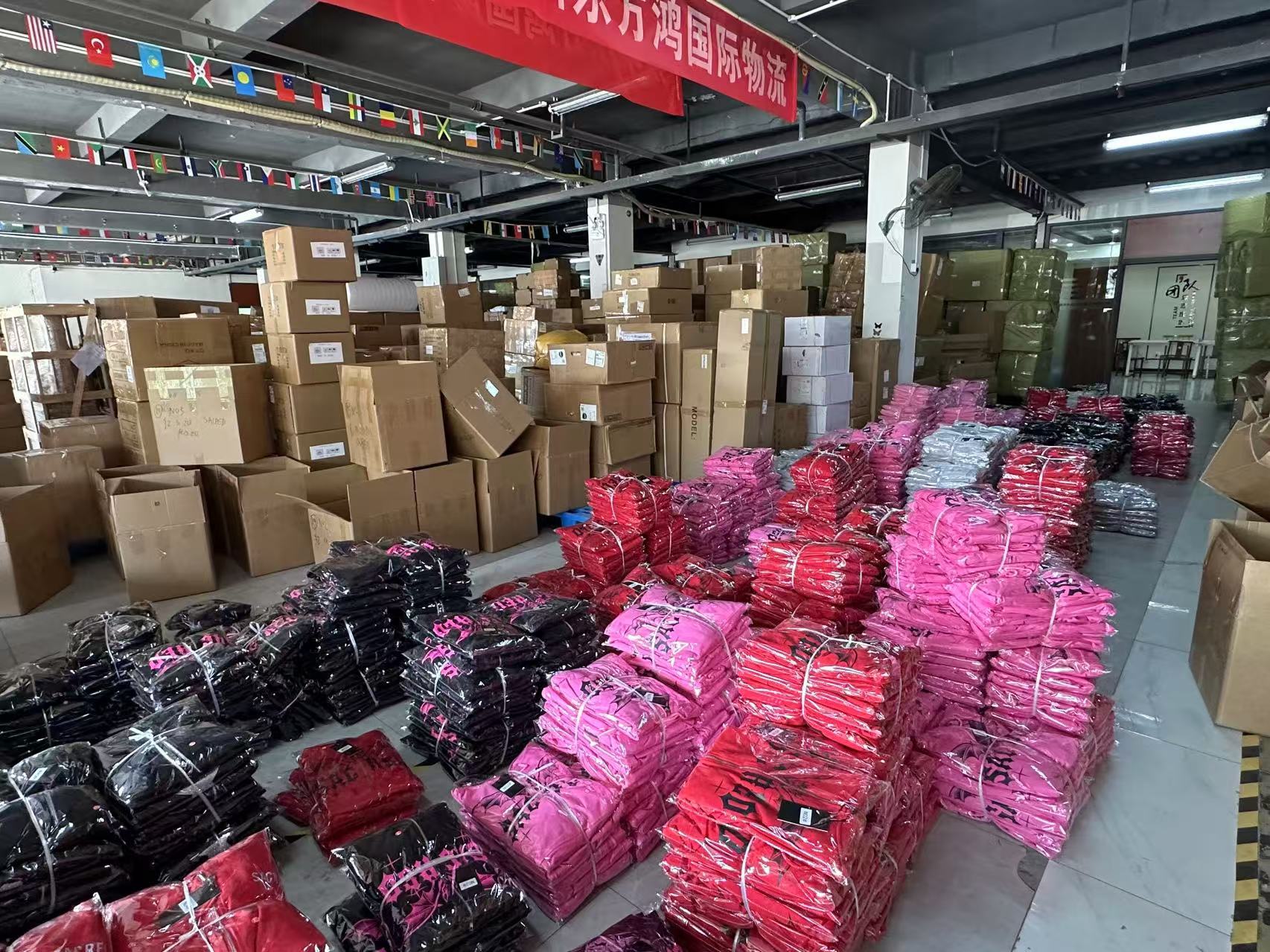
Yes—importing clothes from China to the UK can be worthwhile when the product specification, compliance work, and complete landed cost are controlled before production begins. A low supplier price is useful only when the finished garments can clear customs and reach the market without expensive rework.
China offers many options for private-label apparel, cut-and-sew production, knitwear, uniforms, sportswear, and accessories. You can also combine goods from several factories at a China warehouse, which may make a consolidated shipment more efficient than sending several small consignments.
Where the Margin Really Goes
Your real cost may include:
- Product price, sampling, moulds, trims, and packaging
- Pickup from one or more suppliers in China
- Export handling, freight, insurance, and warehouse work
- Customs duty, import VAT, brokerage, and UK destination charges
- Relabelling, inspection, storage, and final delivery
A garment that looks profitable at factory level may become much less attractive after duty, VAT, failed labels, or a missed selling date are included. Work from the expected cost per sellable unit, not only the price on the supplier quotation.
You can send us your garment type, supplier city, quantity, carton details, and UK delivery postcode, and we can help you compare the whole landed-cost picture before you place the production order.
What Do You Need to Import Commercial Clothing into Great Britain?
You need a suitable GB EORI, a clear importer-of-record arrangement, an accurate UK commodity code, consistent commercial documents, and a customs declaration completed through the appropriate process. You can appoint a customs agent, but the importer should still understand what is being declared and who is responsible for the duty and VAT.
GB EORI, CDS, and the Importer of Record
Businesses importing into England, Scotland, or Wales normally need an EORI number beginning with GB. Customs declarations are handled through the UK Customs Declaration Service, either by the importer or an appointed customs agent.
Agree the Incoterm before booking. EXW, FOB, DAP, and DDP can place different responsibilities on the seller, buyer, forwarder, and customs agent. A DDP quotation may be convenient, but ask who is the importer of record, whose EORI is used, whether duty and VAT are included, and whether you will receive the import evidence needed for your records.
The official UK import goods step-by-step guide is a useful starting point for checking registration, declarations, commodity codes, valuation, and record keeping.
Documents That Should Agree With Each Other
Prepare a commercial invoice, packing list, bill of lading or air waybill, purchase order, payment evidence, product photos, fibre composition, country of origin, and carton measurements. The invoice should show the seller, buyer, description, quantity, currency, value, and Incoterm.
A useful packing list can show style, colour, size range, carton number, pieces per carton, gross weight, net weight, and dimensions. If customs sees 1,000 polyester jackets on the invoice but the labels and packing list describe cotton shirts, clearance may slow down while the difference is investigated.
Great Britain Is Not the Same as Northern Ireland
Northern Ireland follows different customs arrangements from Great Britain. An XI EORI may be required for imports and other customs activities involving Northern Ireland. Confirm the applicable EORI, customs declaration, and importer arrangements before shipping.
You can provide us with your invoice, packing list, product photos, destination, and Incoterm, and we can help you identify gaps before the shipment enters the customs process.
Great Britain Textile Labelling: Check Before Bulk Production
Prepare the label artwork before you approve bulk production. UK textile labelling rules focus on accurate fibre information, and the label needs to match the garment that consumers will actually receive.
Fibre Content Must Be Accurate
The label must show the fibre content, including fur and other animal parts where relevant. If a product has two or more components with different fibre contents, the content of each component may need to be shown.
Use recognised fibre names and make the percentages match the actual mass composition. Do not copy a catalogue description if the lining, filling, elastic, or decorative section changes the composition. The official UK textile labelling guidance explains the basic requirements for manufacturers and retailers.
Keep the Label Readable and Traceable
Labels should remain attached and legible through normal handling and cleaning. In addition to the textile information, keep manufacturer, importer, product reference, and batch information organised so that the goods can be traced if a safety or quality issue appears.
A “Made in China” statement is not a substitute for fibre content information. Country of origin still needs to be declared for customs, while the textile label must communicate the information required for the product.
Special Items Need Extra Review
Children’s sleepwear, garments containing fur or other animal-derived textile parts, protective clothing, and products with special claims may need more than a basic label check. Ask the factory for material evidence and test documents before labels are printed in bulk.
You can share the label artwork, fibre composition, product photos, and selling channel with us, and we can help connect the compliance preparation with the shipping plan.
How Do You Work Out UK Duty and Import VAT?
You work it out from the correct commodity code, origin, customs value, applicable duty, and the VAT rules for the goods. Import VAT is separate from customs duty, and a freight quote alone does not show your final import cost.
Commodity Code Comes First

The UK commodity code can depend on the garment type, knitted or woven construction, fibre, intended wearer, and how the product is made. Use the UK Trade Tariff service to check the code, duty rate, VAT treatment, and any applicable measures.
Do not copy a supplier’s HS code without checking the UK classification. An exporter may use a different level of classification, while a UK import declaration needs the applicable UK commodity code and supporting product details.
Customs Value and VAT Value
The customs value is not simply whichever number produces the lowest duty. Keep the commercial invoice, payment record, purchase order, freight information, insurance details, and any adjustments that affect the valuation.
Import VAT is generally calculated using the customs value plus relevant duty and certain incidental expenses, such as transport and insurance to the first destination or a known further destination in the UK. The standard UK VAT rate is 20% for most goods, but clothing can have special VAT treatment in some circumstances, such as qualifying children’s clothing. Confirm the exact treatment for your product and importer status.
The UK guidance on working out the VAT value explains why transport, duty, and other import-related costs can affect the VAT calculation.
Be Careful With DDP
DDP can make the delivery experience feel simple, but it does not automatically solve ownership, VAT recovery, or record-keeping questions. Ask for a written breakdown of customs clearance, duty, VAT, delivery, storage, and any disbursement charges.
We can review the product description, declared value, commodity-code information, and proposed Incoterm with you before you accept a door-to-door quotation.
Pick the Transport Mode Around Your Reorder Rhythm
Sea freight remains the economical choice for planned clothing stock. Air freight and express are useful when a launch date or stockout matters more than the lowest transport cost, while rail can sit between sea and air when a suitable route is available. Truck freight can be the middle option for larger, time-sensitive loads.
The right choice depends on more than transit days. Our shipping from China to the UK service can compare the route against your cargo profile and delivery point.
| Method | Best Fit | Typical Time | Main Watch-Out |
| LCL Sea Freight | Smaller mixed orders | 35–55 days | UK destination minimums and handling |
| FCL Sea Freight | Regular or high-volume stock | 30–50 days | Fill the container efficiently |
| Rail Freight | Mid-sized orders needing a middle option | 25–36 days | Route availability and border changes |
| Air Freight | Urgent replenishment | 6–15 days | Volumetric weight can increase the bill |
| Express | Samples and small parcels | 3–8 business days | Higher unit rate and surcharges |
| truck Freight | Larger, time-sensitive loads | 20–30 days | Border crossings and vehicle limits |
Do not compare only the headline freight number. Compare the delivery date, customs scope, destination charges, carton handling, and the cost of stock arriving late. You can share the total CBM, gross weight, carton dimensions, and ready date with us, and we can compare the practical options.
Typical Door-to-Door Time from China to the UK
Door-to-door time includes supplier pickup, export processing, consolidation, the main transport leg, UK customs, and final delivery. The ranges below are planning estimates, not guaranteed delivery promises.
| Route | Sea | Rail | Air | Express | Truck |
| Shenzhen/Yantian to Felixstowe | 35–47 days | 25–35 days | 6–14 days | 3–6 business days | 20–28 days |
| Guangzhou/Nansha to Southampton | 36–49 days | 25–35 days | 7–14 days | 3–6 business days | 20–28 days |
| Shanghai/Ningbo to London Gateway | 37–50 days | 25–35 days | 7–15 days | 4–7 business days | 20–29 days |
| Qingdao/Xiamen to Felixstowe | 36–53 days | 28–38 days | 8–15 days | 4–8 business days | 22–30 days |
| Shanghai/Ningbo to Southampton | 35–50 days | 26–36 days | 7–15 days | 4–8 business days | 20–30 days |
Sea schedules, peak periods, port congestion, customs checks, weather, carrier changes, and the final postcode can move the actual date. Production time is separate, so add sampling and manufacturing lead time before promising a launch or replenishment date.
If your sales date is fixed, send us your cargo information and we can compare available sailing, rail, air, or express schedules and help you build a buffer that is more realistic than the transit time alone.
Clothing Freight Cost Planning for UK Delivery
Freight prices change with the origin city, UK port, cargo volume, chargeable weight, sailing or flight date, season, destination postcode, and service scope. You can use the following figures as a budgeting reference only.
| Route | Sea LCL / FCL | Air | Express | Rail | Truck |
| Shenzhen/Yantian to Felixstowe | LCL: $105–$175 /cbm FCL: $1,500–$5,000 /cont. | $4–$9 /kg | $7–$28 /kg | $1–$3.0 /kg | $2–$5 /kg |
| Shanghai/Ningbo to Felixstowe | LCL: $100–$170 /cbm FCL: $1,500–$5,200 /cont. | $5–$9 /kg | $6–$25 /kg | $1.2–$3.0 /kg | $2–$5 /kg |
| Guangzhou/Nansha to Southampton | LCL: $105–$180 /cbm FCL: $1,550–$5,200 /cont. | $4–$9 /kg | $7–$28 /kg | $1.2–$3.0 /kg | $2–$5 /kg |
| Qingdao/Xiamen to London Gateway | LCL: $110–$195 /cbm FCL: $1,650–$5,500 /cont. | $5–$9 /kg | $8–$30 /kg | $1.4–$3.0 /kg | $2–$5 /kg |
The price ranges are not firm quotations. They may exclude UK duty, import VAT, customs brokerage, port or terminal charges, storage, inspection, residential delivery, insurance, and other local costs. Ocean and air rates can change quickly, so a shipment-specific quotation is needed before you confirm the order.
You can provide us with the supplier city, route, carton dimensions, gross weight, total CBM, UK postcode, and preferred delivery date, and we will prepare a clearer comparison for your actual shipment.
Real Case Studies: Import Clothes from China to UK
Case Study 1: Shipping Clothing (98.4 KG, 8 Cartons) from China to the UK by Air Freight DDP
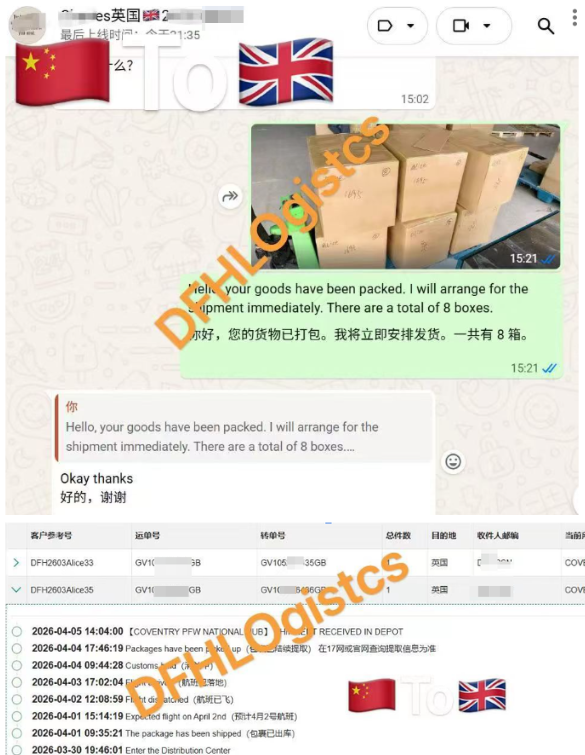
Customer Source: Our Official Website
Cargo Type: Clothing
Chargeable Weight: 98.4 KG
Cargo Quantity: 8 Cartons
Shipping Route: Shenzhen, China to the UK
Shipping Method: Air Freight DDP Door-to-Door
Transit Time: 6 Days
The customer needed to ship 8 cartons of clothing from Shenzhen to the UK and wanted a fast, convenient transportation solution. To simplify the import process, the customer chose Air Freight DDP Door-to-Door service, covering international transportation, customs clearance, and final delivery.
- Cargo Receiving & Shipment Preparation: We received the 8 cartons of clothing in Shenzhen and checked the cargo information, package quantity, and shipping details before dispatch.
- Air Freight Arrangement: Considering the shipment’s weight of 98.4 KG and the customer’s delivery requirements, we arranged Air Freight as a fast solution for transporting the clothing to the UK.
- Customs Clearance & DDP Service: Under the agreed DDP terms, we coordinated the required customs documentation, UK import clearance, and applicable duties and taxes, saving the customer from handling complicated import procedures.
- Final Door-to-Door Delivery: After customs clearance, we arranged local transportation and delivered the 8 cartons directly to the customer’s designated address in the UK.
The shipment was successfully delivered in just 6 days. The customer was very satisfied with the fast transportation and convenient DDP Door-to-Door service.
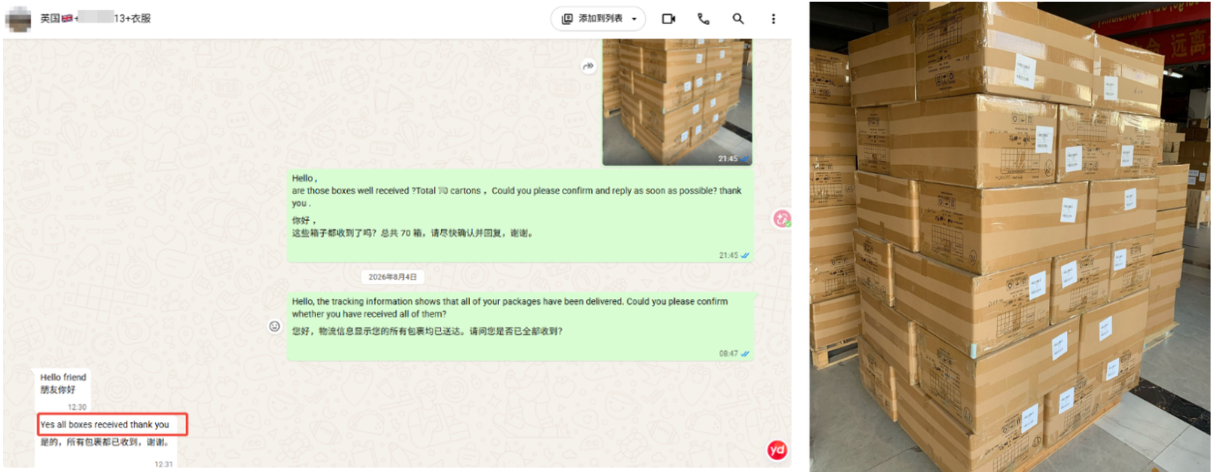
Case Study 2: Shipping Clothing (1,690 KG, 70 Cartons) from Guangzhou to Manchester, UK by Rail Freight DDP
Customer Source: Customer Referral
Cargo Type: Clothing
Chargeable Weight: 1,690 KG
Cargo Quantity: 70 Cartons
Shipping Route: Guangzhou, China to Manchester, UK
Shipping Method: Rail Freight DDP Door-to-Door
Transit Time: Approximately 33 Days
The customer was a clothing buyer sourcing products from Guangzhou for the UK market. He needed a reliable shipping partner to compare air and rail freight, arrange supplier pickup, and handle UK customs clearance and import taxes.
- Supplier Pickup & Warehouse Receiving: We collected the 70 cartons directly from the supplier in Guangzhou and transported them to our Shenzhen warehouse, so the customer did not need to arrange domestic transportation.
- Air and Rail Freight Comparison: We provided quotations for both air and rail freight. After comparing the costs and transit times, the customer selected rail freight as a better fit for his budget and delivery requirements.
- Cargo Preparation & Inspection: After receiving the goods, our warehouse team checked the 70 cartons and prepared the 1,690 KG shipment for international transportation.
- Cargo Insurance Arrangement: We offered insurance at 0.05% of the declared cargo value. Although the calculated premium was approximately US$1.78, the minimum charge at the time was RMB 80 per shipment, which became the final insurance fee.
Price Note: The insurance rate and minimum premium reflect the terms available at the time of this shipment. Rates and coverage conditions may change and should be confirmed before booking.
- Rail Freight DDP Arrangement: We arranged Rail Freight DDP Door-to-Door shipping from China to the UK, providing a balance between transportation costs and delivery time.
- UK Customs Clearance & Tax Handling: Under the agreed DDP terms, we handled the required UK import customs clearance and applicable duties and taxes, saving the customer from managing these procedures himself.
- Final Door-to-Door Delivery: After customs clearance, we arranged final delivery directly to the customer’s address in Manchester.
The shipment was successfully delivered in approximately 33 days. The customer was satisfied with our pickup arrangements, insurance support, and convenient DDP shipping service.
If you need to ship clothing from China to the UK, you can send us your cargo weight, carton dimensions, supplier location, and delivery postcode. We can help arrange a reliable Door-to-Door delivery.
FAQs About Import Clothes from China to the UK
Do I Need a UK Company to Import Commercial Clothing?
Not necessarily, but the shipment still needs a clear UK import arrangement, an appropriate EORI, and an importer of record. A non-UK business may need a customs agent, UK-established partner, or other structure depending on how the goods are sold and delivered. Confirm the arrangement before using DDP or sending stock to a UK warehouse.
Can I Use My Supplier’s HS Code When Importing Clothes from China to the UK?
You can use your supplier’s HS code as a starting reference, but it should be checked against the UK commodity code system. Clothing classification depends on factors such as garment type, fibre composition, knitted or woven construction, and intended wearer. An incorrect code may lead to duty calculation errors or customs delays.
Do Children’s Clothes Imported from China to the UK Qualify for Zero-Rated VAT?
Qualifying children’s clothing and footwear may be zero-rated for UK VAT. However, the goods must meet HMRC’s requirements regarding design, size, intended age group, and suitability. Adult clothing and non-qualifying items are generally subject to the standard 20% VAT rate. Check the product specifications before calculating import costs.
Can I Ship Clothing from China Directly to Amazon FBA Warehouses in the UK?
Yes. You can ship clothing directly from China to a UK Amazon FBA warehouse through a freight forwarder. Amazon labeling, packaging, customs clearance, and VAT requirements should be confirmed before shipping.
If you need to ship clothing to the UK Amazon FBA, you can contact us for a suitable Amazon FBA shipping solution and Door-to-Door delivery.
Is a Certificate of Origin Required When Importing Clothes from China to the UK?
Not every clothing shipment requires a separate Certificate of Origin. However, you should provide accurate country-of-origin information in your customs documents and keep supporting production or supplier records. Additional origin documents may be requested for specific customs procedures or origin verification. A Certificate of Origin does not automatically eliminate UK import duties.
Final Thoughts
Importing clothes from China to the UK works best when you decide the compliance file and transport route together. Sea freight may protect your margin, air can protect a launch date, rail can smooth replenishment, and truck freight can offer a practical bridge for cargo that needs to move faster without paying the full air rate.
You can send us your garment type, fabric composition, supplier city, carton quantity, total weight or CBM, UK postcode, and expected delivery date. We’ll review your requirements, compare suitable sea, air, rail, express, and truck options, and recommend a practical shipping plan.