At first glance, importing furniture from China to Australia can look like a simple buying decision: choose a product, pay the supplier, and arrange delivery. In practice, furniture is bulky, easy to damage, and often made from materials that Australia checks carefully at the border.
This guide covers shipping options, estimated costs and transit times, required documents, import duties, timber packaging requirements, and a real shipment case to help you plan your furniture imports more effectively.
Import Furniture from China to Australia Without Surprises
China’s major furniture hubs include Foshan, Guangzhou, Shenzhen, Dongguan, Shanghai, Ningbo, and Zhejiang. You can source sofas, tables, chairs, cabinets, beds, office furniture, outdoor products, and custom pieces with flexible materials, sizes, finishes, and packaging.
The factory price is only one part of your landed cost. Your budget may also include supplier pickup, export handling, international freight, cargo insurance, Australian customs duty, GST, biosecurity charges, destination handling, and final delivery.
Common products include:
- Sofas, chairs, beds, dining tables, and cabinets
- Kitchen units, wardrobes, office desks, and shelving
- Outdoor furniture made from metal, plastic, wood, bamboo, or rattan
- Mattresses, upholstered products, and private-label furniture
When several factories are involved, we can collect, inspect, consolidate, and prepare one shipment. Share your supplier quotations with us and we can help compare routes to Australia.
What Should You Check Before the Cargo Leaves China?
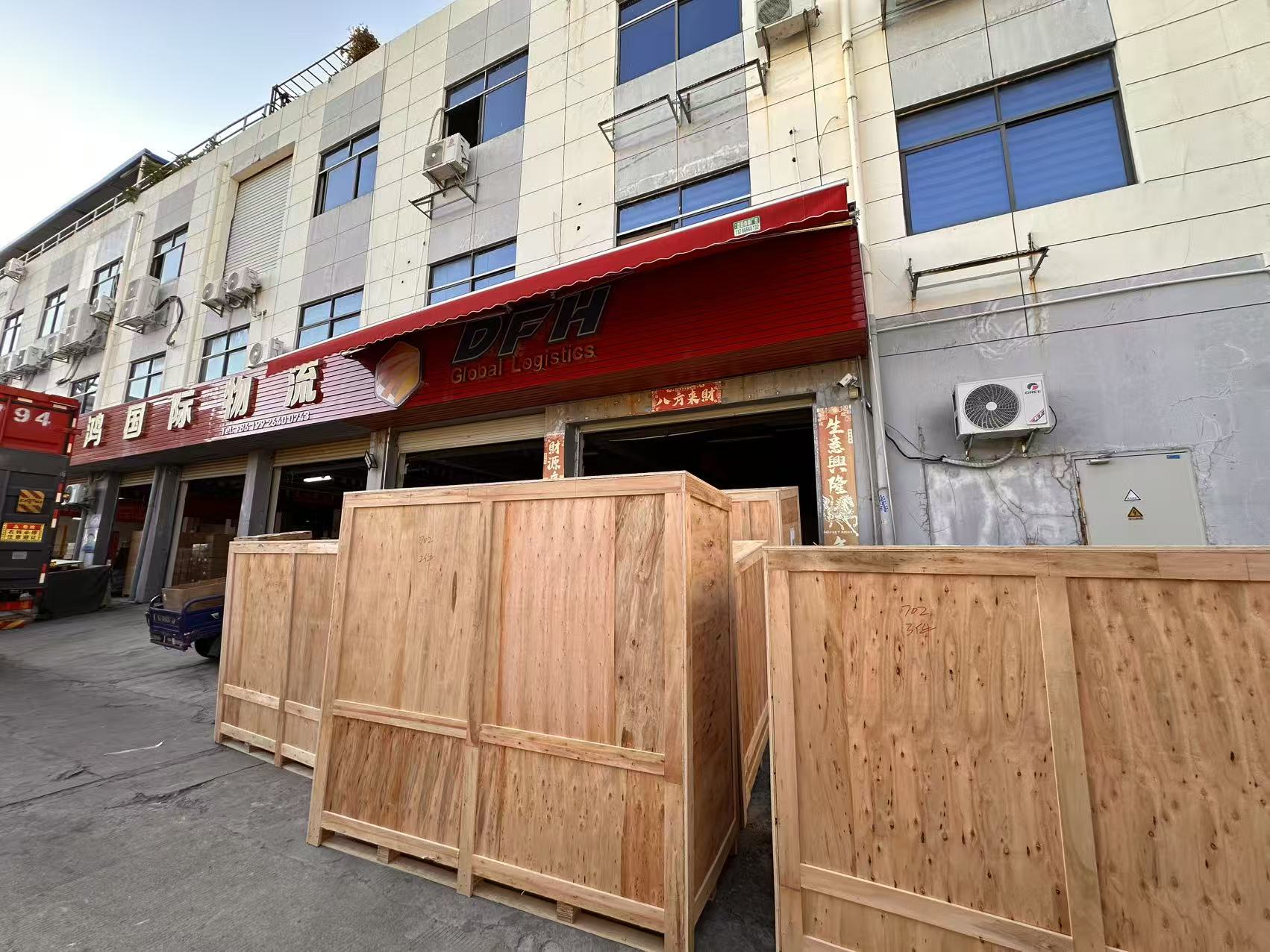
Start with material compliance. A wooden table, rattan chair, and metal cabinet can face different Australian checks. Record the main material, wood species if known, whether the item is new or used, and whether packaging contains solid timber.
Check BICON for the Exact Material
Australia’s biosecurity conditions are product-specific. Search the BICON import conditions database for timber, bamboo, rattan, cane, and composite products before shipping. Some goods may need approved treatment, evidence, or an import permit.
Use Clean, Compliant Wood Packaging
Solid-wood pallets, crates, skids, and dunnage normally need ISPM 15 treatment and the correct mark. They must also be free from bark, soil, insects, and other risk material. The DAFF timber and wood packaging guidance outlines possible treatment, re-export, or destruction at the importer’s expense.
Review Product Safety Before Selling
For goods sold in Australia, check product-specific consumer standards before production, especially for tall storage units, entertainment units, children’s products, cots, bunk beds, mattresses, and upholstered goods. Add required labels, warnings, manuals, and fixing instructions to the purchase order.
Early preparation prevents avoidable delays. You can send us product photos, materials, and the packaging plan, and we can help flag shipping issues before pickup.
Australia-Specific Documents and Declarations
Clear documents help customs and biosecurity officers understand the shipment. Avoid describing mixed goods simply as “furniture.”
Commercial Invoice
Show the seller, buyer, description, quantity, unit price, total value, currency, Incoterm, and origin. Use specific descriptions such as “solid rubberwood dining table” rather than one general label.
Packing List
List cartons, dimensions, gross and net weight, CBM, quantity, and material for each item. For wood or bamboo products, include the supplier’s available material details.
Bill of Lading and Import Declaration
For a commercial consignment over AUD 1,000 cleared into home consumption, an Import Declaration is generally required. The Australian Border Force import declaration guidance covers importer details, transport, tariff classification, and customs value. A broker may lodge it through the Integrated Cargo System.
Origin and Biosecurity Evidence
Keep origin evidence, treatment records, packing declaration, product specifications, and purchase records together. If paperwork is unclear, send us the invoice and packing list and we can review the likely requirements.
If you need help preparing documents for shipping furniture from China to Australia, send us your commercial invoice, packing list and cargo details. We can help review the available information, coordinate shipping arrangements and guide you through the documentation requirements before dispatch.
Sea, Air or Express: Which Route Fits Your Furniture?
Sea freight is usually the practical choice for bulky furniture. LCL suits smaller orders, FCL gives larger shipments better control, and air or express is better for samples, hardware, replacement parts, or urgent small items.
| Shipping Method | Best For | Typical Time | Main Consideration |
| Sea Freight LCL | Small and medium orders | 20–35 days | Flexible, but destination handling applies |
| Sea Freight FCL | Larger orders and repeat stock | 20–35 days | Better control and fewer handling points |
| Air Freight | Urgent samples or high-value items | 5–12 days | Fast, but bulky furniture is expensive |
| Express Shipping | Hardware and small parcels | 3–5 work days | Oversized cartons may be charged by volume |
For reference only. The right option depends on volume, carton size, urgency, postcode, and whether you need port or door delivery. Share your product list, CBM, weight, pickup city, and destination with us and we can compare the routes.
Transit Time of Shipping Furniture from China to Australia?
The door to door schedule includes pickup, consolidation, export handling, customs, biosecurity, deconsolidation, and final delivery—not just the ocean voyage.
| China → Australia Destination | Sea Freight | Air Freight | Express |
| Shenzhen → Sydney | 20–28 days | 5–10 days | 3–5 work days |
| Guangzhou → Melbourne | 22–30 days | 5–10 days | 3–5 work days |
| Shanghai → Sydney | 22–30 days | 5–12 days | 3–5 work days |
| Ningbo → Melbourne | 22–32 days | 5–12 days | 3–5 work days |
| Xiamen → Brisbane | 20–28 days | 5–10 days | 3–5 work days |
| Shenzhen → Perth | 25–35 days | 6–12 days | 4–6 work days |
These are planning estimates, not guaranteed delivery times. Holidays, missed cut-offs, congestion, corrections, inspections, weather, and access restrictions can change the schedule. Share important project dates early so we can build a buffer.
Shipping Costs of Shipping Furniture from China to Australia
LCL is normally quoted by CBM, FCL by container, and air or express by actual or chargeable weight. The table is a planning reference for common routes.
| Route | LCL Sea Freight | FCL Sea Freight | Air Freight | Express |
| Shenzhen → Sydney | US$80–180/CBM | US$1,500–3,500/cont. | US$5–12/kg | US$7–30/kg |
| Guangzhou → Melbourne | US$80–180/CBM | US$1,600–3,800/cont. | US$5–12/kg | US$7–30/kg |
| Shanghai → Sydney | US$90–190/CBM | US$1,700–4,000/cont. | US$5.5–13/kg | US$8–30/kg |
| Ningbo → Melbourne | US$90–190/CBM | US$1,700–4,000/cont. | US$5.5–13/kg | US$8–30/kg |
| Xiamen → Brisbane | US$85–185/CBM | US$1,600–3,800/cont. | US$5–12/kg | US$8–30/kg |
| Shenzhen → Perth | US$110–220/CBM | US$1,900–4,500/cont. | US$6–14/kg | US$8–30/kg |
These are indicative freight ranges only. They exclude goods value, duty, 10% GST, Australian processing and biosecurity charges, terminal or destination fees, inspection or treatment, insurance, storage, and local delivery unless stated. Rates change with season, capacity, dimensions, and delivery conditions.
Share your packing list and Australian postcode with us for an estimate based on the actual cargo.
Australian Customs Duty, GST and Timber Due Diligence
Most furniture falls in Chapter 94, but duty depends on the actual chair, table, sofa, cabinet, mattress, or set. Material, design, use, and presentation can affect classification. The current Australian tariff classification for Chapter 94 shows the headings and rates; the final classification must match the goods.
Declare the Correct Value and Description
Australian customs use the declared value to assess duty and help calculate GST. Do not undervalue the invoice or call commercial stock personal effects. Accurate descriptions, quantities, transaction values, and supplier documents reduce valuation questions.
Budget for GST and Import Charges
GST is generally 10% of the taxable importation, including customs value, duty, and international transport and insurance to Australia. The ABF GST guidance for imported goods explains the calculation. Import declarations may also attract processing and biosecurity charges.
Keep Timber Due Diligence Records
For regulated timber, ask the supplier for wood species, harvest country or region when available, and FSC or PEFC evidence if held. Keep the records with your import file instead of relying on verbal assurances.
We can coordinate pickup, inspection, consolidation, repacking, labeling, customs support, insurance, and final delivery. You can provide us with the product materials and invoice value so we can flag the main customs and biosecurity questions.
Case Study: Shipping Furniture (2 Wooden Frames & 1 Wooden Crate) from China to Australia by Sea Freight DDP
Customer Source: Official Website Inquiry
Cargo Type: Coffee Table, Rug, TV Unit and Bed Frames
Chargeable Weight: 570 KG
Cargo Quantity: 2 Wooden Frames and 1 Wooden Crate
Shipping Route: China to Australia
Shipping Method: Sea Freight DDP Door-to-Door
Transit Time: 30 Days After Vessel Departure
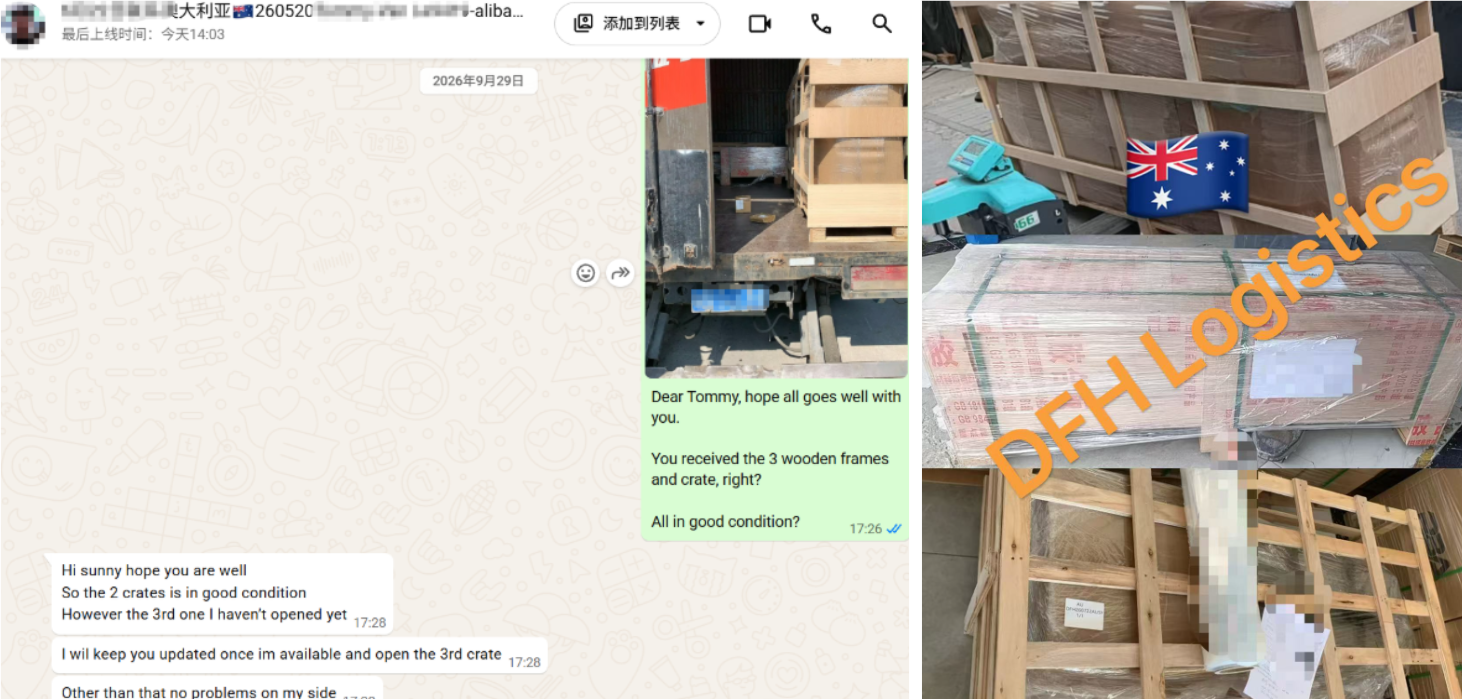
The customer was furnishing a home in Melbourne and had purchased furniture from four suppliers on Alibaba and 1688. The customer needed a receiving address in China, warehouse storage, packaging improvements and convenient door-to-door delivery to Australia.
- Multi-Supplier Coordination & Consolidation: With the customer’s permission, we contacted four suppliers across Foshan, Fujian and Zhejiang to confirm cargo details and collection arrangements. We received and stored the goods at our Shenzhen warehouse until all orders were ready for shipment.
- Cargo Inspection & Packaging Reinforcement: Our warehouse team identified insufficient protection for the rug and a damaged wooden frame. After explaining the issues and confirming the additional packaging costs with the customer, we arranged a replacement frame and added foam protection for the stone coffee table.
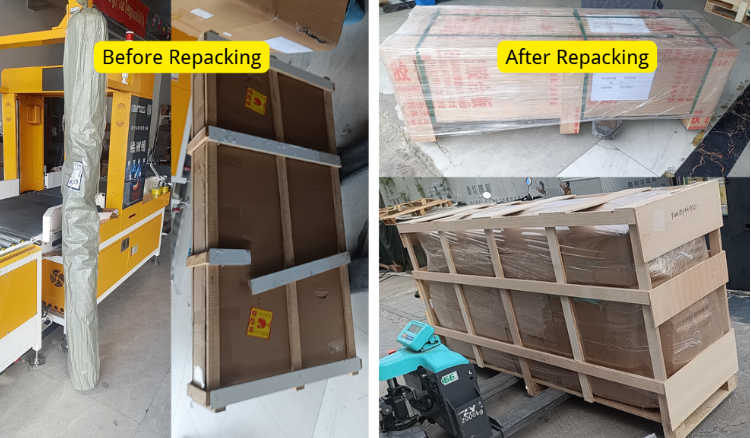
- Space-Efficient Packing: We combined the rug with suitable items in a new wooden frame and prepared the shipment as two wooden frames and one wooden crate, improving cargo protection and making better use of the packing space.
- Sea Freight DDP Arrangement: Based on the cargo volume, budget and delivery requirements, we arranged Sea Freight DDP Door-to-Door from China to Melbourne, including international transportation, Australian customs clearance, and applicable duties and taxes under the agreed service.
- Unloading Coordination & Final Delivery: We confirmed the unloading arrangements with our Australian delivery partner before final delivery, so the customer did not need to find a separate forklift provider. The shipment was delivered to the customer’s address in Melbourne.
The shipment arrived 30 days after the vessel’s departure. The customer confirmed receipt of all three packages, and the two opened packages were reported to be in good condition. Our supplier coordination, packaging support and unloading arrangements helped simplify the customer’s furniture import process.
If you need to ship furniture from China to Australia, contact us with your supplier locations, cargo details and delivery postcode, and we can help arrange a suitable DDP Door-to-Door solution.
FAQs About Importing Furniture from China to Australia
Do I Need an Import Licence to Bring Furniture into Australia?
A general import licence is not required for every furniture shipment, but certain materials may be subject to Australian biosecurity requirements. Before shipping, we recommend checking the Australian Government’s BICON import requirements, especially for solid-wood furniture, bamboo products and untreated timber. We can help review your cargo details and coordinate the necessary shipping preparations.
Is Furniture from China Duty-Free Under ChAFTA?
Some furniture imported from China may qualify for reduced or zero customs duty under the China–Australia Free Trade Agreement (ChAFTA), provided the goods meet the applicable rules of origin and documentation requirements. We can help collect the product information needed for your shipment, while the applicable tariff should be confirmed according to the correct HS code and origin evidence.
What Happens if Wooden Packaging Does Not Meet Australian Import Requirements?
Non-compliant wooden packaging may require treatment, re-export or destruction, potentially resulting in additional costs and delays. Applicable solid-wood pallets and crates must meet Australian biosecurity requirements, including ISPM 15 treatment and marking where required. We can help check your packaging arrangements before dispatch to reduce the risk of avoidable problems.
Can I Ship Furniture to Australia Without a Customs Broker?
Yes, importers may lodge certain customs declarations themselves. However, furniture shipments involving multiple product types or regulated materials can require additional classification and documentation checks. Under an agreed DDP service, we can coordinate customs clearance, applicable duties and taxes, and final delivery within the confirmed service scope.
Do I Need to Visit China to Inspect Furniture Before Shipping?
No. We can help coordinate supplier communication, receive furniture at our warehouse, check package quantities and visible cargo condition, take photos, arrange suitable repacking and consolidate orders from multiple suppliers. For expensive or customized furniture, a more detailed pre-shipment inspection may also be worthwhile.
How Much Does Cargo Insurance Cost for Furniture Shipped from China to Australia?
We work with Ping An Insurance and China Pacific Insurance (CPIC) and can arrange insurance for eligible shipments at a reference premium as low as 0.05% of the insured value. Fragile cargo may be subject to a 5% deductible, depending on the policy terms. Final premiums, coverage and exclusions must be confirmed with the insurer.
What Is the Import Duty on Furniture from China to Australia?
There is no single import duty rate for all furniture. The applicable rate depends on the HS code, materials, product type, origin and eligibility for preferential tariffs under ChAFTA. Some furniture products may qualify for zero duty, while others may be subject to different rates. We can help collect the product details needed to assess your shipment and identify the information required to confirm the applicable duty.
Final Thoughts
Import furniture from China to Australia becomes easier when material checks, documents, freight, customs value, GST, biosecurity, and delivery are planned before shipping. Sea freight is often a practical balance for bulky furniture.
Send us the product name, material, quantity, package dimensions, weight, CBM, pickup city, and Australian destination. We will review the shipment and suggest a suitable shipping plan.