Textiles can mean much more than finished clothing. Your shipment may contain fabric rolls, yarn, greige goods, towels, bedding, uniforms, bags, home textiles or finished apparel. Each category can have a different HTS classification, label requirement and customs risk.
The factory price is often the easy number to find. The harder part is making sure the material description, country of origin, manufacturer information, labels and entry documents all match. This guide explains what to prepare before you book freight, with the United States as the main destination.
What Counts as Textiles for a U.S. Import?
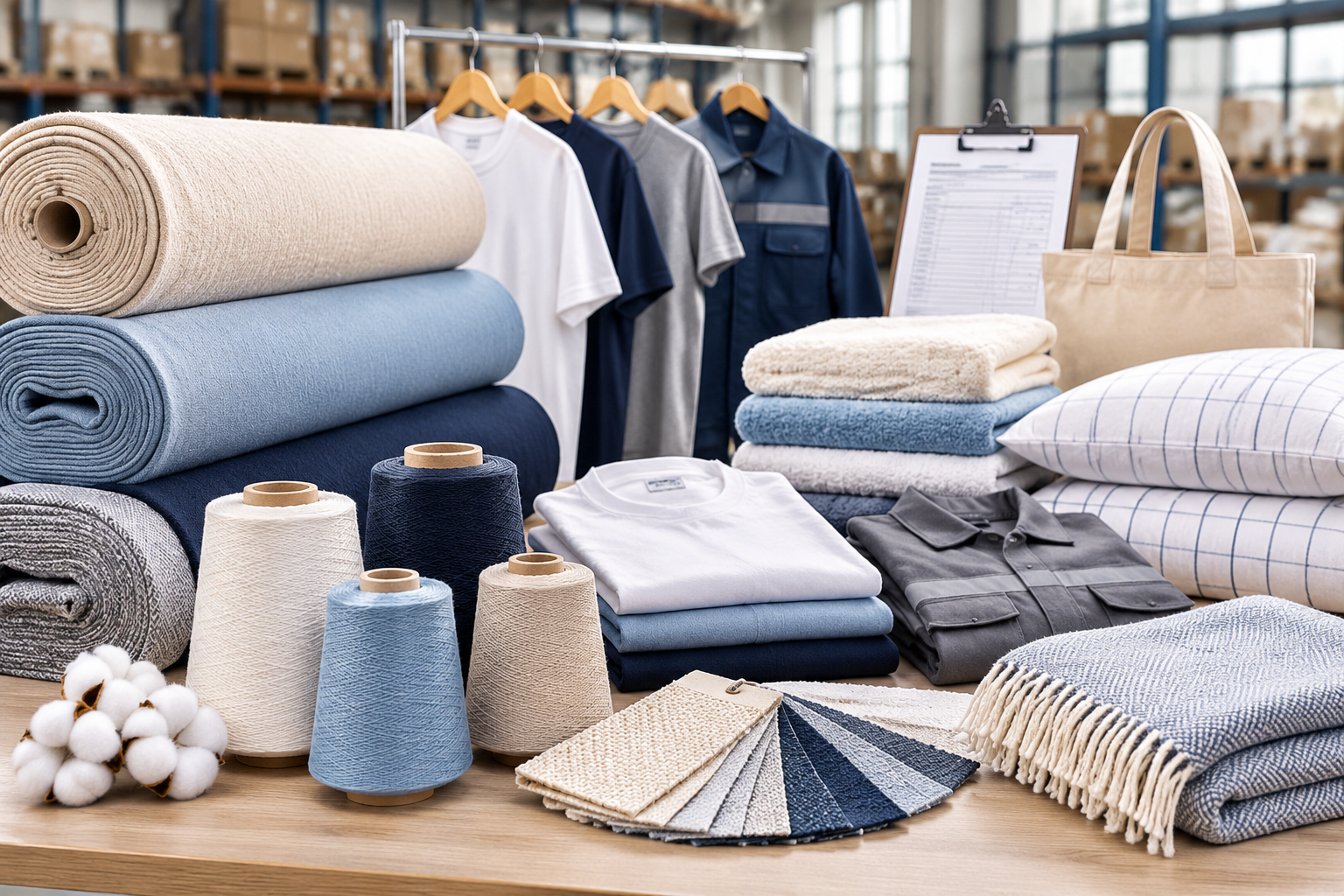
If you plan to import textiles into the United States, you first need to understand how your products are classified. Textiles generally include yarns, fabrics, clothing, and other finished textile goods. However, the exact customs treatment depends on the product’s material, construction, intended use, and how it is sold.
Common commercial textile imports include:
- Fabrics: Knitted and woven fabric rolls
- Yarns: Cotton, polyester, nylon, wool, and blended yarn
- Apparel: T-shirts, uniforms, children’s clothing, and workwear
- Home Textiles: Towels, blankets, bedding, and table linens
- Accessories: Bags, textile accessories, and made-up textile articles
- Mixed-Material Products: Finished goods containing textile panels or textile fillings
When preparing your commercial invoice, avoid using vague descriptions such as “textile products” or “fabric.” Instead, identify the actual product, material, construction, intended use, and country of origin. For example, “100% polyester woven fabric rolls for apparel production” gives your customs broker a much clearer starting point than simply writing “fabric.”
If you are unsure how to describe your products for international shipping, send us your product name, material details, and photos. We can help review the cargo information and coordinate with your supplier before shipment.
Start with the Fabric File, Not the Freight Quote
Before requesting a shipping quotation, take some time to organize your product information. A complete product file helps your supplier, testing laboratory, customs broker, and freight forwarder work from the same information.
This is especially important when you purchase different fabrics or textile products from multiple Chinese manufacturers.
Record the Product at Style or Material Level
Keep the fibre percentage, weave or knit construction, width, weight, finish, colour, coating, end use and package format for each product. For finished apparel, add size range, garment type, trims and care instructions. For fabric, record roll count, roll length, net weight, gross weight and the number of pieces per carton.
Confirm the Actual Manufacturer
A trading company may issue your invoice, but the U.S. entry may still need information about the factory that actually produced the textile. Ask for the factory name, address, production location and the details needed for the Manufacturer Identification Code, or MID.
Keep a Sample and Inspection Record
Save the approved sample, product photos, purchase order, test report and inspection notes. If the supplier changes the yarn, dye, coating, width or packaging, treat it as a product change and review whether the classification or compliance evidence needs to be updated.
You can send us the supplier city, product description, material details and carton information before booking. We will help separate the product questions from the transportation questions so the quote is based on the cargo you will actually ship.
U.S. Labels Need More Than “Made in China”
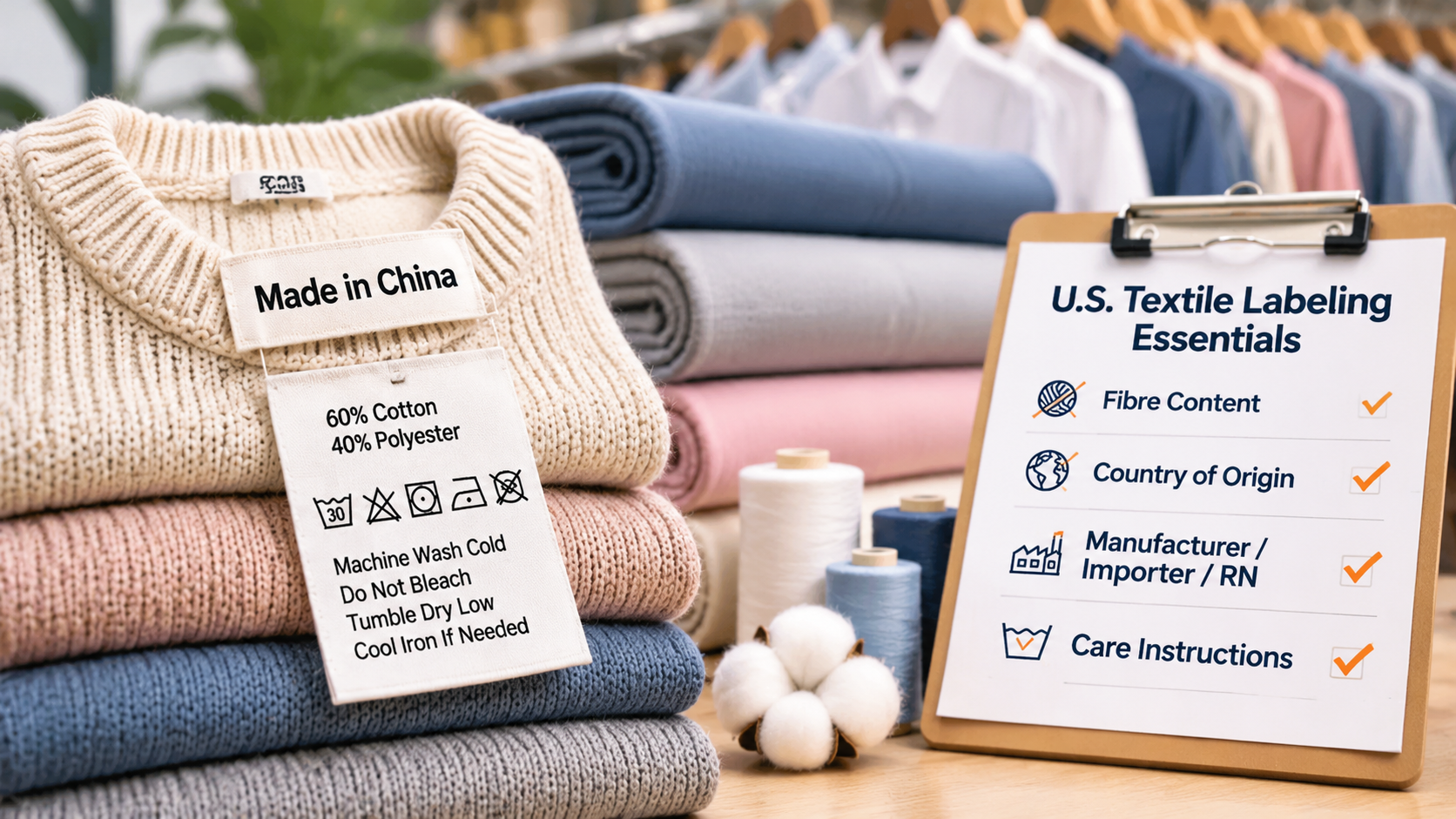
Most covered textile products need accurate fibre content, country-of-origin and manufacturer or dealer identification. Covered apparel and certain piece goods also need appropriate care instructions under the FTC Care Labeling Rule. Requirements vary by product type, so confirm the applicable rules before production.
Fibre Content
Use the permitted fibre name and state the fibre percentages accurately. Blends, coatings, linings and decorative fibres should not be hidden behind a broad marketing phrase such as “premium fabric.” Keep the label, product listing, invoice and laboratory report consistent.
Country of Origin
The country of origin is not necessarily the same as the country where you purchased the goods or where the trading company is located.
For example, when fabric is produced in one country but cut, sewn, dyed, or finished in another, determining its origin may require a closer review of U.S. Customs rules.
Before shipping, ask your manufacturer for the production details and supporting origin information. You can also review the CBP textile import guidance for more information about textile origin and marking requirements.
Manufacturer, Importer or RN
The label can generally identify the company responsible for manufacturing, importing, distributing or selling the product, using the permitted name or Registered Identification Number where applicable. Confirm whose identity belongs on the final label before production.
Care Instructions
Care instructions should be permanent, easy to find, and appropriate for the actual fabric and finish. If your products are made from blended fibres or have special coatings, do not simply copy generic washing instructions from another product. Ask your supplier to confirm that the care information matches the material being manufactured.
The FTC Care Labeling Rule explains the care-instruction requirements for covered textile wearing apparel and certain piece goods.
If your clothing or textile products need new labels, replacement labels, or additional shipping marks before export, send us your label artwork, product photos, and supplier details. We can coordinate with your supplier or arrange labeling and relabelling at our Shenzhen warehouse before shipment.
Which Documents Does CBP Usually Need?
A commercial textile shipment normally needs a complete invoice, packing information, transport documents, importer details and an accurate entry. Ocean cargo also needs timely security-filing information, while regulated products may need additional testing or certificates.
| Document | Prepared By | U.S. Purpose | Check Before Departure |
| Commercial invoice | Supplier / seller | Value, description, origin, terms and transaction parties | Use a specific textile description and real value. |
| Packing list | Supplier / warehouse | Cartons, rolls, quantities, weights and dimensions | Match package marks with the invoice and booking. |
| Bill of lading or air waybill | Carrier / forwarder | Transport evidence and consignee details | Use the same shipper, consignee and routing everywhere. |
| Importer number and bond | U.S. importer / broker | Entry release and duty-security obligations | Confirm the importer of record and bond arrangement. |
| ISF for ocean cargo | Importer / broker / forwarder | Advance cargo-security data | Confirm filing timing before the vessel cutoff. |
| HTS, origin and MID data | Importer / broker / manufacturer | Classification, duty and actual factory identity | Do not use a trading company in place of the actual factory. |
| Labels and compliance evidence | Importer / supplier / laboratory | FTC, CPSC or other product requirements | Make sure reports describe the finished goods. |
The documents should agree on the product description, quantity, value, origin, manufacturer and package information. A broker may ask for additional evidence if CBP reviews the entry, the tariff line is unclear or the goods appear inconsistent with the declared value.
If you are unsure which documents your textile shipment needs for U.S. customs clearance, contact us before shipping. You can send us your product details, supplier information, and destination address. We can help you identify the shipping documents to prepare, communicate directly with your supplier, and check the available paperwork before booking.
HTS Classification, Duty and the True Customs Value
Your duty result is determined by the correct HTSUS classification, origin and customs value, not by the supplier’s product title. The same broad category of “textile” can include tariff lines with very different rates and additional measures.
Classify the Actual Product
When checking your HTS code, consider:
- Fibre Composition: Cotton, polyester, nylon, wool, or blended materials.
- Construction: Knitted, woven, or nonwoven fabrics.
- Product Type: Fabric rolls, clothing, towels, bedding, or bags.
- Product Condition: Finished or unfinished goods.
- Intended Use: Apparel manufacturing, household use, or other applications.
Do not assume that all textile products share the same tariff classification. You can check the current tariff schedule through the USITC Harmonized Tariff Schedule or review relevant CBP rulings when classification is uncertain.
Check China-Related Measures
China-origin textiles may be subject to additional tariffs or other product-specific trade measures. Importers should check the current HTSUS, applicable Chapter 99 provisions and relevant trade notices before calculating the final duty rate, as these measures may change.
Declare an Accurate Customs Value
Your declared customs value should be supported by proper transaction records. Keep the following information available:
- Purchase orders and commercial invoices
- Payment records and applicable discounts
- Commissions and assists, where relevant
- Supporting freight and insurance information
An unusually low declared value can lead to additional customs questions, shipment delays, and unexpected costs.
Separate Import Duties from Your Freight Quote
When comparing shipping quotations, remember that basic international freight does not necessarily cover every U.S. import expense.
Your total landed cost may include:
- International freight and origin handling
- Customs brokerage and customs bond
- Merchandise Processing Fee (MPF)
- Import duties and additional tariffs
- Customs examination and storage charges
- U.S. inland transportation and final delivery
If you are unsure how to calculate the total shipping cost, send us your product description, material, cargo value, and destination postcode. We can help review your cargo information, compare available shipping options, and coordinate with the relevant parties to prepare a clearer shipping quotation.
When Do CPSC, Flammability or UFLPA Rules Enter the Picture?
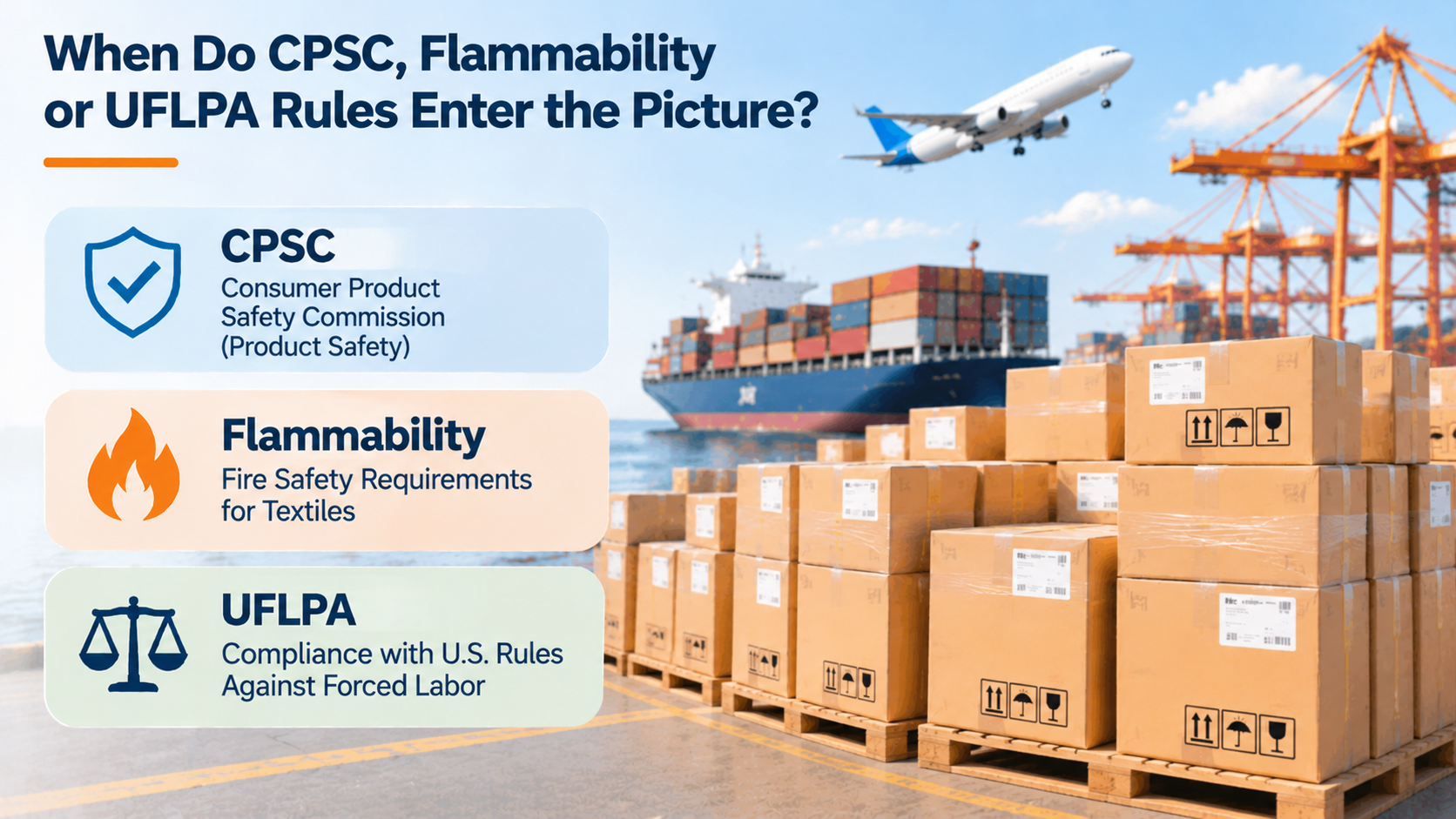
Not every textile shipment needs the same compliance documents. The requirements depend on whether you import ordinary apparel, children’s products, sleepwear, or goods involving supply-chain risks.
Before placing a bulk order, check which rules apply to your specific products.
Children’s Products and CPSC Evidence
If you import children’s apparel or other regulated children’s products, additional safety requirements may apply.
Depending on the product, you may need:
- Testing by a CPSC-accepted third-party laboratory
- A Children’s Product Certificate (CPC) where required
- Evidence of compliance with applicable flammability standards
- Additional testing for small parts, prints, or decorative components where relevant
The CPSC apparel and textile guide provides a useful starting point for checking product safety requirements.
General Apparel Flammability
Many textile wearing-apparel products are subject to U.S. flammability requirements.
If you manufacture different colours, fabrics, or finishes, do not automatically assume that one test report covers every product variation. Ask your testing laboratory whether the tested sample represents the finished garments you intend to sell.
UFLPA and Supply-Chain Records
The United States prohibits the import of goods made wholly or partly with forced labour.
If your textile products contain cotton or other materials with supply-chain concerns, you should maintain records showing where the materials came from and how the goods were manufactured.
Useful supporting records include:
- Purchase orders and supplier invoices
- Spinning and weaving records
- Mill and production information
- Payment and transportation records
- Country-of-origin evidence
The CBP UFLPA guidance explains the import restrictions and rebuttable-presumption framework.
Do Not Confuse a Test Report with a CPC
A laboratory test report and a Children’s Product Certificate serve different purposes.
A test report records the testing performed and its results, while a CPC is issued by the responsible party for applicable children’s products to certify compliance with relevant requirements.
Before shipping, ask your testing laboratory, U.S. importer, or compliance specialist which documents apply to your specific products.
Choose Sea, Air or Rail for Importing from China to USA
For U.S.-bound commercial textiles, sea freight is usually the economical option for volume, air or express works for urgent or lighter cargo.
| Shipping Method | Best For | Door-to-Door Estimate | Main Trade-Off |
| Sea LCL | Smaller commercial textile lots | 16–30+ days | Lower entry cost, but consolidation and destination handling add variables. |
| Sea FCL | Large, steady textile inventory | 16–30+ days | More control and lower unit cost when the container is well utilized. |
| Air Freight | Urgent replenishment or valuable samples | 5–15 days | Faster, but volumetric weight and fuel charges matter. |
| Express | Documents, samples and small parcels | 3–7 business days | Fastest option, usually with the highest per-kilogram cost. |
If you are unsure which shipping methods are suitable for your cargo, you can contact us directly for help.
How Long Does Importing Textiles from China to the USA Take?
A realistic door-to-door window is usually about 3–7 business days by express, 5–15 days by air and 16–30+ days by sea, depending on the U.S. coast, inland destination, customs release and delivery scope.
| Shipping Route | Sea Freight DTD | Air Freight DTD | Express DTD |
| Shenzhen → Los Angeles, CA | 16–30 days | 5–14 days | 3–7 business days |
| Shanghai → New York, NY | 18–30+ days | 7–15 days | 3–7 business days |
| Guangzhou → Chicago, IL | 16–30+ days | 6–14 days | 3–7 business days |
| Ningbo → Houston, TX | 18–30+ days | 6–15 days | 3–7 business days |
| Qingdao → Seattle, WA | 18–25 days | 6–15 days | 3–7 business days |
| Xiamen → Miami, FL | 20–30+ days | 7–15 days | 4–7 business days |
For reference only. These estimates exclude factory production, lab testing, inspection, warehouse receiving and any time caused by an exam or missing document.
You can send us the cargo-ready date, required arrival date and final ZIP code. We will compare the available schedules and help you leave enough time for customs and inland delivery.
How Much Does It Cost to Import Textiles from China to the USA?
For budgeting, LCL may be around US$80–250/CBM, FCL about US$1,500–5,500 per container, air freight roughly US$7–12/kg and express about US$7–28/kg.
| Shipping Route | Sea Freight LCL | Sea Freight FCL | Air Freight | Express |
| Shenzhen → Los Angeles, CA | US$80–250/CBM | US$1,500–5,500/cont. | US$7–12/kg | US$7–28/kg |
| Shanghai → New York, NY | US$90–250/CBM | US$1,600–5,500/cont. | US$8–12/kg | US$7–28/kg |
| Guangzhou → Chicago, IL | US$80–250/CBM | US$1,500–5,500/cont. | US$7–12/kg | US$7–28/kg |
| Ningbo → Houston, TX | US$90–250/CBM | US$1,600–5,500/cont. | US$8–12/kg | US$7–28/kg |
| Qingdao → Seattle, WA | US$90–250/CBM | US$1,600–5,500/cont. | US$8–12/kg | US$7–28/kg |
| Xiamen → Miami, FL | US$90–250/CBM | US$1,600–5,500/cont. | US$8–12/kg | US$7–28/kg |
Note: These are general freight reference ranges, not fixed Door-to-Door quotations. FCL rates vary by container size and booking conditions. Customs clearance, import duties, additional tariffs, destination handling, storage, and final delivery may incur separate charges.
You can provide us your product type, supplier city, carton dimensions, gross weight, total CBM, cargo value, and U.S. delivery postcode. We can compare LCL, FCL, air freight, and express options and arrange a suitable shipping solution from China to USA.
Case Study: Shipping Bamboo Fiber Bedding Sets from China to USA Amazon
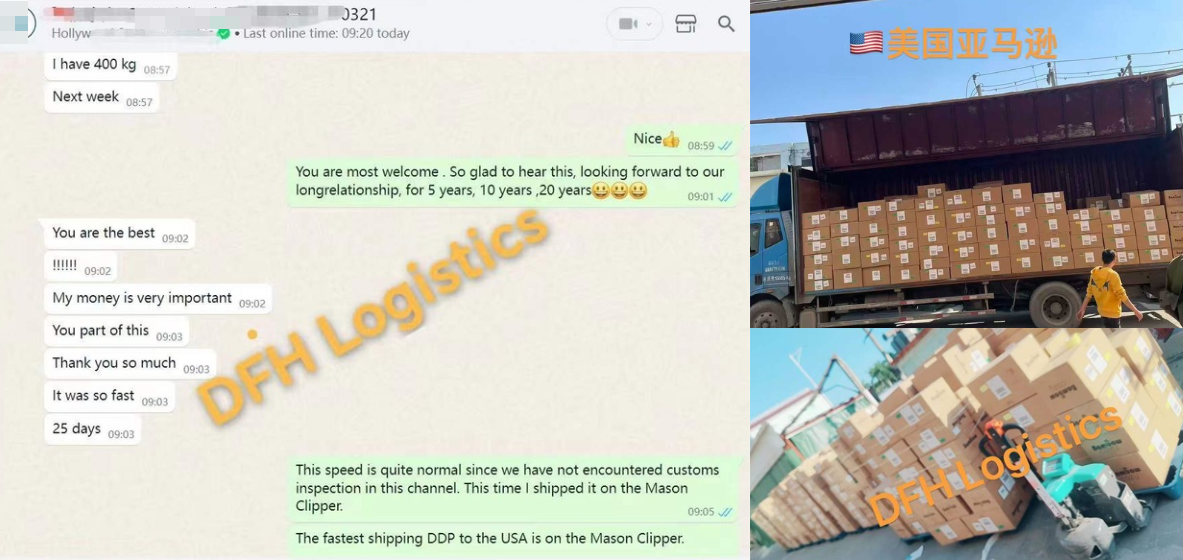
Customer Source: Customer Inquiry
Cargo Type: Bamboo Fiber 4-Piece Bedding Sets
Chargeable Weight: 5,213 KG
Cargo Quantity: 315 Cartons
Shipping Route: China to USA Amazon FBA Warehouse
Shipping Method: Sea Freight DDP Door-to-Door
Transit Time: 25 Days
The customer needed to ship 315 cartons of bamboo fiber bedding sets from China to an Amazon warehouse in the USA. Before shipment, the customer required assistance with textile-related document checks, product labeling, and Amazon shipment preparation. He wanted a reliable DDP solution covering customs clearance and final delivery.
- Cargo Receiving & Quantity Checking: We received all 315 cartons at our warehouse and checked the cargo quantity, packaging condition, and shipment information before arranging transportation.
- Textile Document Review: Our team reviewed the available product and shipping information, including fiber composition, country of origin, product descriptions, commercial invoice, and packing list. We checked the consistency of the documents and confirmed the necessary details before dispatch.
- Product Labeling Service: Based on the customer’s confirmed labeling requirements, we assisted with applying the required labels to the bedding products. We also checked the label information and placement before shipment to help prepare the goods for Amazon delivery.
- Sea Freight DDP Arrangement: Considering the total shipment weight of 5,213 KG, we arranged Sea Freight DDP from China to the USA. The service covered international transportation and the agreed destination customs and delivery arrangements.
- Customs Clearance: Under the agreed DDP terms, we coordinated US import customs clearance and applicable duties and taxes, helping the customer avoid handling complicated import procedures independently.
- Final Amazon Warehouse Delivery: After customs clearance, we arranged local transportation and delivered all 315 cartons directly to the customer’s designated Amazon warehouse in the USA.
The shipment was successfully delivered to the designated Amazon warehouse within 25 days. The customer was very satisfied with our document checking, labeling assistance, and convenient Door-to-Door service. He also confirmed that he had another batch of goods planned for shipment and looked forward to continuing our cooperation.
If you also need to ship textiles from China to the USA, contact us for cargo pickup, document checking, labeling, and DDP Door-to-Door services. We also support Amazon FBA shipping from China, including cargo preparation, labeling, customs clearance, and delivery to designated Amazon fulfillment centers in the USA.
FAQ about Importing Textiles from China to the USA
Is It Legal to Import Textiles from China to the USA for Resale?
Yes, commercial textile imports are legal when the goods comply with applicable U.S. customs, labelling, product-safety and trade requirements. The importer must declare the goods accurately and remain responsible for the import transaction.
What Is an MID Code for Textile Imports?
An MID is a manufacturer identification code used in U.S. textile and apparel entry data. It is based on the actual manufacturer’s information, not simply the name of the trading company that issued the invoice.
Do Textile Samples Need Customs Clearance?
Yes. Samples still need an accurate description, value and origin declaration. A sample may have a different commercial purpose or value, but it should not be declared as a gift when it is part of a business purchase or product-development process.
Can I Use DDP When Importing Textiles from China to the USA?
You can use DDP if the written service clearly explains customs clearance, duty, taxes, delivery and the Importer-of-Record arrangement. Ask whether you will receive the entry records needed for accounting, compliance and future customs questions. If you are unsure whether DDP suits your textile shipment, contact us for a suitable shipping solution and a free quote.
Does Every Imported Textile Need a CPC When Shipping from China to USA?
No. A CPC applies to applicable children’s products subject to CPSC rules; it is not a universal certificate for every adult textile, yarn or fabric shipment. Your product category and intended user determine whether a CPC or other evidence is needed.
Final Thoughts
Importing textiles from China to the USA is not only a freight decision. The strongest shipment plan connects the fabric or garment specification, FTC labels, HTS classification, manufacturer information, CBP entry documents, CPSC or UFLPA review and the final delivery route.
You can send us your textile description, supplier city, package information, U.S. ZIP code and target delivery date. We will help you choose a suitable shipping plan.