
Your Best Freight Forwarder from China to Italy
Fast & Reliable Shipping Delivers Your Cargo Safely to Italy


Our Shipping Services from China to Italy
DFH Logistics is a professional China-Italy freight forwarder. We offer global freight services, including customs clearance, duty payment, etc. Whether you choose sea, air, or railway routes, we are always at your service.
Based on your cargo and freight requirements, we can offer you the most suitable transit plans with efficient transit times and competitive costs. Whether you ship e-commerce restocks or bulk factory cargo, we can deliver anywhere in Italy safely and efficiently.
If you are looking for a reliable freight forwarder from China to Italy, DFH Logistics is your best choice. If you are interested, contact us and send your inquiries!
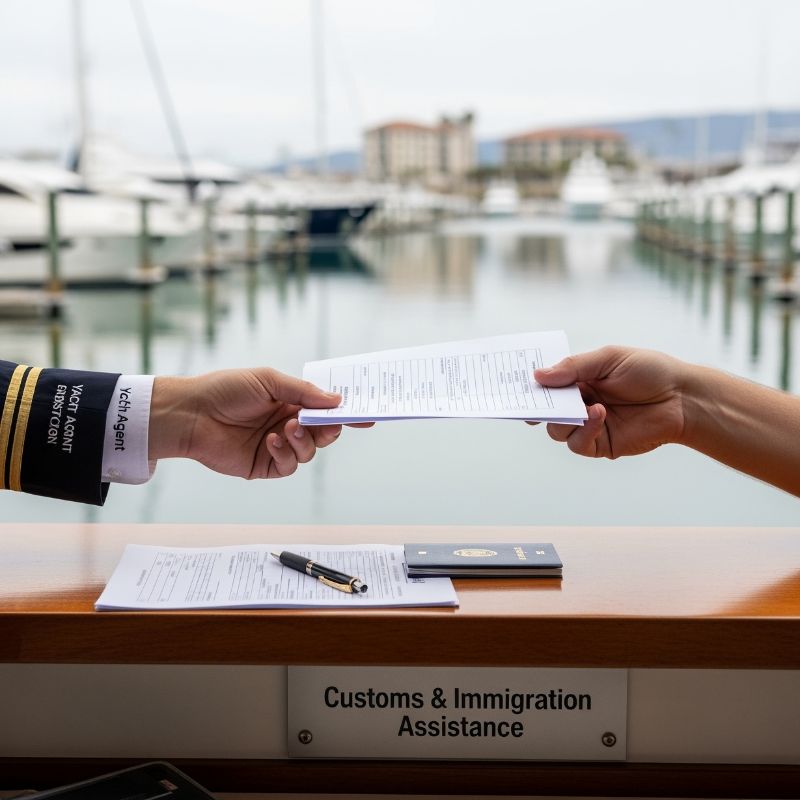
Troubled by complicated customs documents? DFH Logistics can handle customs clearance on your behalf, saving you time and energy without cargo delays.

We can pick up your products from multiple Chinese suppliers and consolidate them, avoiding repeated customs clearance.
Why You Can Trust Us to Ship Your Cargo to Italy
- We can pick up goods directly from factories or warehouses in China, reducing your time on arranging transportation.
- We offer 15 days of free storage. While waiting for shipment to Italy, no additional storage fees will be charged.
- To better protect your cargo during transportation, we can repack your products using reinforced packaging to ensure they arrive safely in Italy.
- We offer inspection services. With detailed quantity and quality checks, we avoid incorrect and missing shipments to Italy.
- We also offer cargo insurance at very competitive prices. When accidents happen, you will suffer less damage and financial loss.
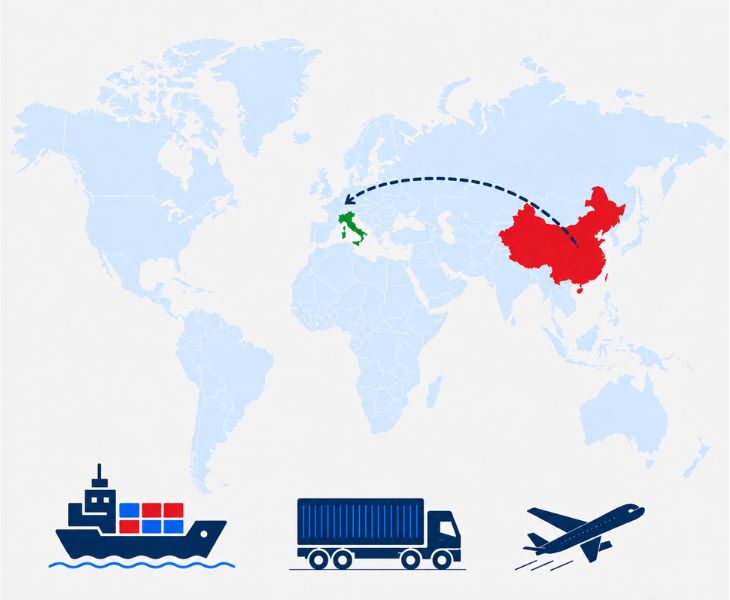
Top Routes to Ship Cargo from China to Italy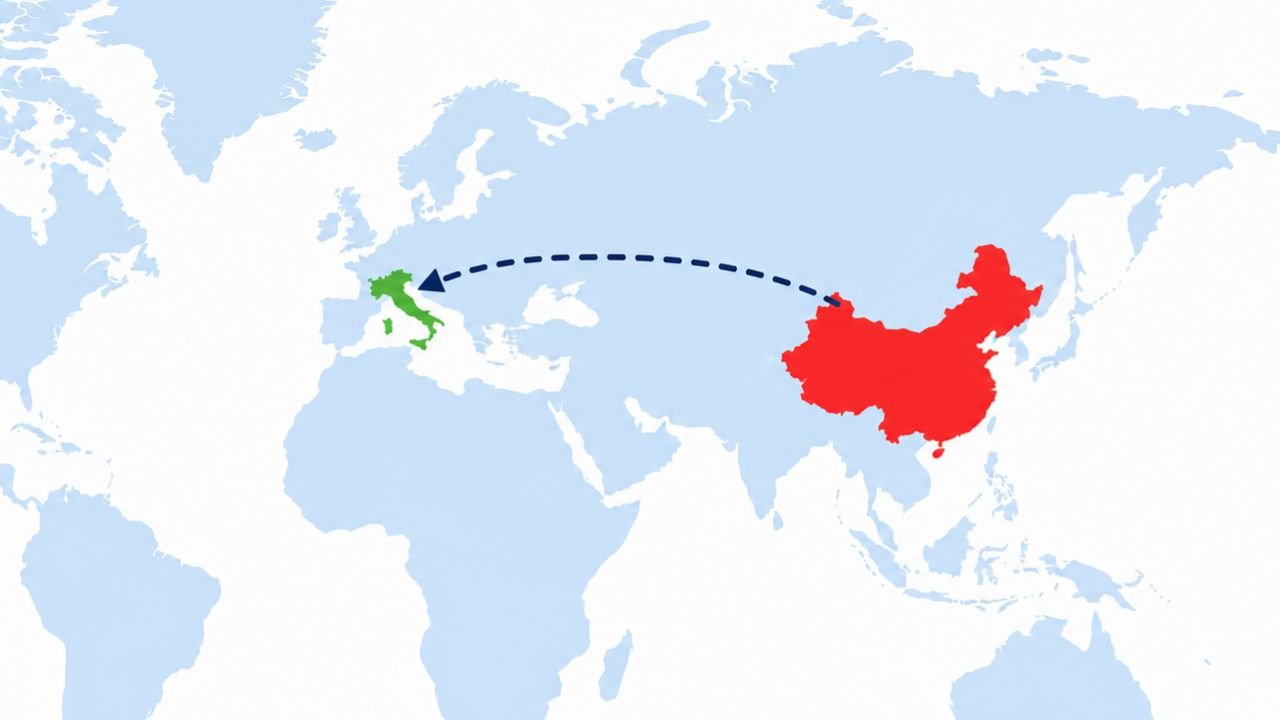
- Sea Freight: Shanghai, Ningbo, Shenzhen, Guangzhou, or Qingdao, through the Red Sea, to the Suez Canal, then to Genoa, Trieste, or La Spezia
- Air Freight: Shanghai Pudong, Shenzhen Bao’an, or Guangzhou Baiyun, to Milan Malpensa Airport; Beijing Capital or Hong Kong to Rome Fiumicino Airport
- Rail Freight: Chengdu, Chongqing, Xi’an, Zhengzhou, Yiwu, or Wuhan to Italy
Due to disruptions in the Red Sea and the Suez Canal, many ocean carriers are rerouting via the Cape of Good Hope. As a result, shipping from China to Italy may take longer than usual.
Will Red Sea and Suez Canal Disruptions Affect Shipping to Italy?
Due to disruptions in the Red Sea and the Suez Canal, sea freight from China to Italy may be affected. The rerouting of some carriers prolongs the transit time for about 15 to 25 days. Railway routes and air routes are less sensitive to disruptions.
Sometimes the rerouting is decided at the last minute based on the conditions in the Red Sea and the Suez Canal. It is hard to estimate. The last-minute changes may cause cargo delays and other subsequent problems.
Considering the real-time vessel schedules and route conditions, DFH Logistics offers the most stable and reliable shipping plans in advance, reducing the possibility of delayed deliveries. We flexibly arrange sea, rail, and air freight, ensuring a smooth cargo release to Italy.
What Documents Are Required for Shipping from China to Italy?
China Customs
- Commercial Invoice: declare the value, name, and quantity of the cargo
- Packing List: list the packaging, weight, and size per carton
- Export Declaration Form: officially declare to China Customs for the legal departure of goods
- Bill of Lading or Air Waybill: identify that the carriers have received the cargo
- Export License (if required): prove that the cargo is qualified for legal export
Italian Customs
- Commercial Invoice: to calculate duties and VAT
- Packing List: to check whether the cargo is compliant with the declaration
- Bill of Lading or Air Waybill: to identify who is eligible to pick up the cargo
- Import Declaration: for import declaration and VAT calculation
- EORI Number: for customs clearance and import declaration
- VAT Number (if required): to calculate VAT
- Certificate of Origin (if required): for tariff preferences or trade compliance
Where Can You Deliver My Cargo in Italy?
DFH Logistics can deliver your cargo directly to major cities and surrounding areas, including Milan and Lombardy Region, Rome and Lazio Region, Bologna, Florence, Venice, Turin, Naples, and other destinations.
Industrial and warehouse areas are also well covered. We can deliver your cargo to logistics hubs and industrial zones for more convenient wholesale and distribution. Amazon FBA warehouse delivery is also available.
In addition, we can reach remote areas in Italy. Wherever you are, we can bring your cargo to your door. You can order door-to-door services for this convenience.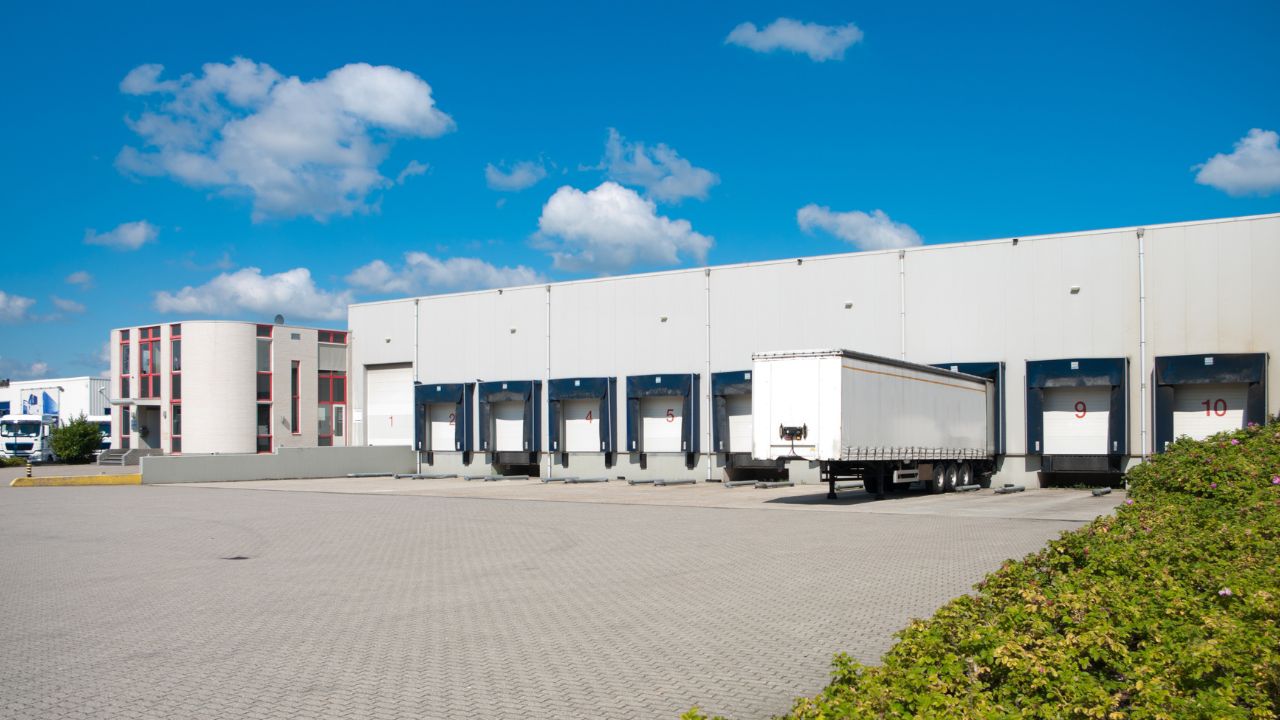
DDU vs DDP in Shipping from China to Italy
In DDU terms, the freight forwarder delivers the cargo to destinations in Italy. It can also handle the export declaration in China. But you are responsible for customs clearance and tariff payment in Italy. As the process is done, you can pick up your cargo. Transit fees are lower in DDU, while you need to pay for duties and tariffs.
In DDU, the process is also more complicated. Insufficient documents may also cause cargo delays.
In DDP, we are responsible for the entire global logistics process, including customs clearance in China and Italy, global transit, and payment of tariffs and VAT. With DDP, you do not have to deal with complicated customs clearance or pay the taxes yourself. The transportation process is simpler.
If you are not familiar with the customs clearance process, you can contact us for help. DFH Logistics has rich experience in global transportation. Whether for document preparation or the declaration process, we can explain and give reliable suggestions. If you want to order DDP services, we can ensure you a hassle-free experience in global transit to Italy.
Factors Affecting Transit Times from China to Italy
Shipping Method
Different transportation methods feature significantly different transit times. Air freight is commonly the fastest transportation and ideal for urgent deliveries. Rail freight takes longer. Sea freight usually has the longest transit time.
Origin Port and Airport in China
The cargo origin in China affects the transit time. Major ports and airports in China, such as Shanghai and Shenzhen, commonly feature more direct shipping routes and more stable vessel schedules. Inland cities in China may cause longer transshipment times.
Destination in Italy
As cargo is delivered to different areas in Italy, transit time varies. In major logistics cities like Milan, Rome, or Bologna, the delivery efficiency is commonly higher. In remote areas or island regions, final deliveries may require longer last-mile delivery times.
Customs Clearance
If documents are insufficient, declaration information is inaccurate, or your cargo is under customs inspection, products may be delayed. Italian customs is more strict about VAT, product information, and import compliance. The efficiency of customs clearance will finally affect the delivery time in Italy.
Red Sea and Suez Canal Situation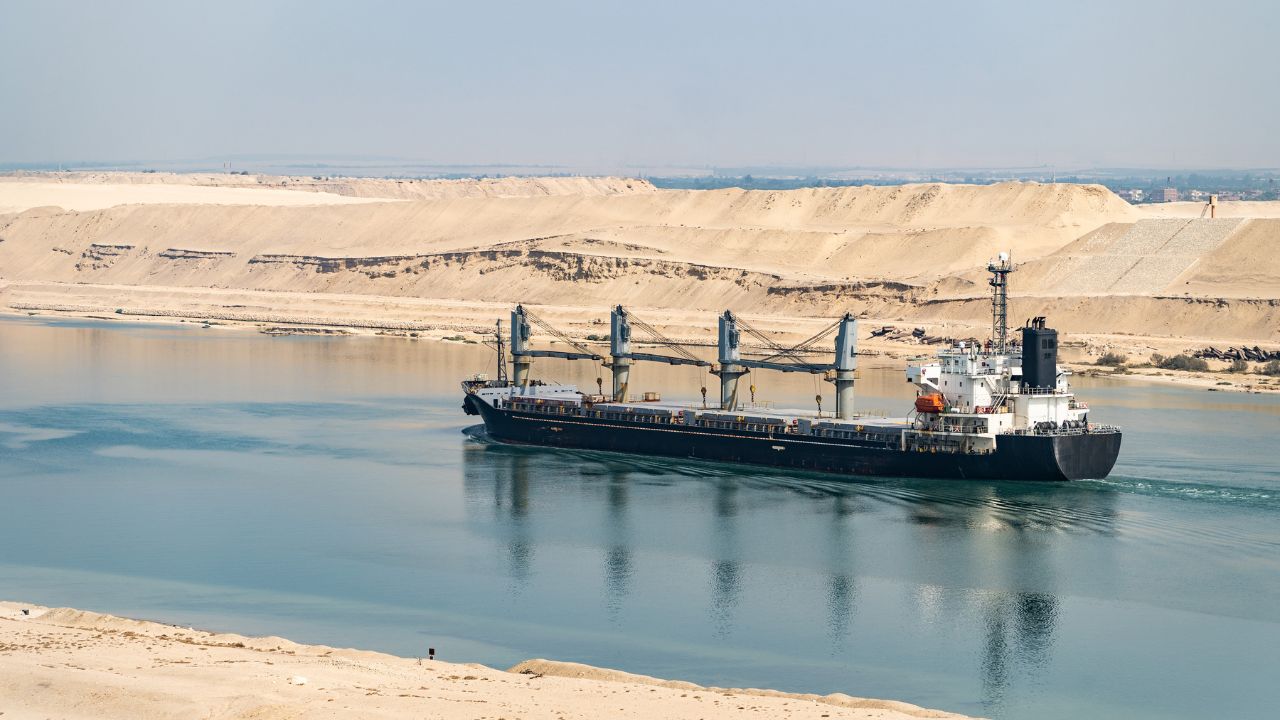
Currently, much of the sea freight between China and Italy depends on the route via the Red Sea and the Suez Canal. If there are safety risks on this route, some shipping companies may take a detour around the Cape of Good Hope, thereby increasing the voyage time.
Capacity and Peak Season
During e-commerce promotion events, Christmas, Italy’s Summer Holiday Period, Ferragosto, or other European festivals, shipping capacity may become scarce. The cost of transportation is also higher. During Chinese festivals, some shipping lines may be on holiday. These factors will affect your cargo shipping to Italy.
Port Congestion
In peak seasons, there may be congestion in major hubs and ports. In import and key transit hubs, such as the Port of Genoa, the Port of La Spezia, the Port of Trieste, Milan Airports, or Malaszewicze, congestion may extend loading, unloading, transshipment, and delivery times.
Force Majeure
Severe weather conditions, port strikes, railway disruptions, flight schedule changes, or changes in international conditions can all affect delivery times.
Though multiple factors affect the transportation time, DFH Logistics has years of experience in global logistics and customs clearance from China to Italy. We closely monitor weather, congestion, route changes, and international conditions. So, before and during transportation, we can respond promptly to any situation and deliver your cargo on time.
How Long Does It Take to Ship Cargo from China to Italy?
- Express: about 3–5 days
- Sea Freight: about 35–55 days
- Air Freight: to airports, about 2–5 days; door to door, about 7–12 days
- Railway Freight: about 30–35 days
- Truck Freight: about 20–28 days
The transit time is an approximate duration rather than an exact one. Many factors affect transit times. If you are planning to ship cargo to Italy and are concerned about time arrangements, you can contact DFH Logistics.
Based on your cargo and requirements, we offer the best logistics solution and possible transit time at a very competitive price, ensuring your cargo reaches Italy on time. And no extra fees will be charged.
How Much Does It Cost to Ship from China to Italy?
| Transportation | Approximate Prices | Charging Methods | Cargo Types |
| Railway Freight | USD 4–6.5/kg | By chargeable weight | Medium cargo, e-commerce restocks, balanced between time and costs |
| Air Freight | USD 5–9/kg (to Airport) USD 7–12/kg (DDP) | By chargeable weight | small-parcel, high-value, urgent, and e-commerce products |
| LCL Sea Freight | USD 35–100/CBM | By volume | Small packs, multi-supplier, cost-sensitive products |
| FCL Sea Freight 20GP | USD 2,200–3,600 | By containers | Bulk commodities, factory direct delivery |
| FCL Sea Freight 40GP / HQ | USD 4,000–5,500 | By containers | Bulk commodities, large-volume products |
Here are the prices in May 2026, and for goods wrapped in paper box packaging. If your cargo is branded or has batteries, the price will be different. You can contact DFH Logistics for more details. We promise to offer you competitive, transparent quotations without any hidden fees.
How to Choose Transportation Methods from China to Italy?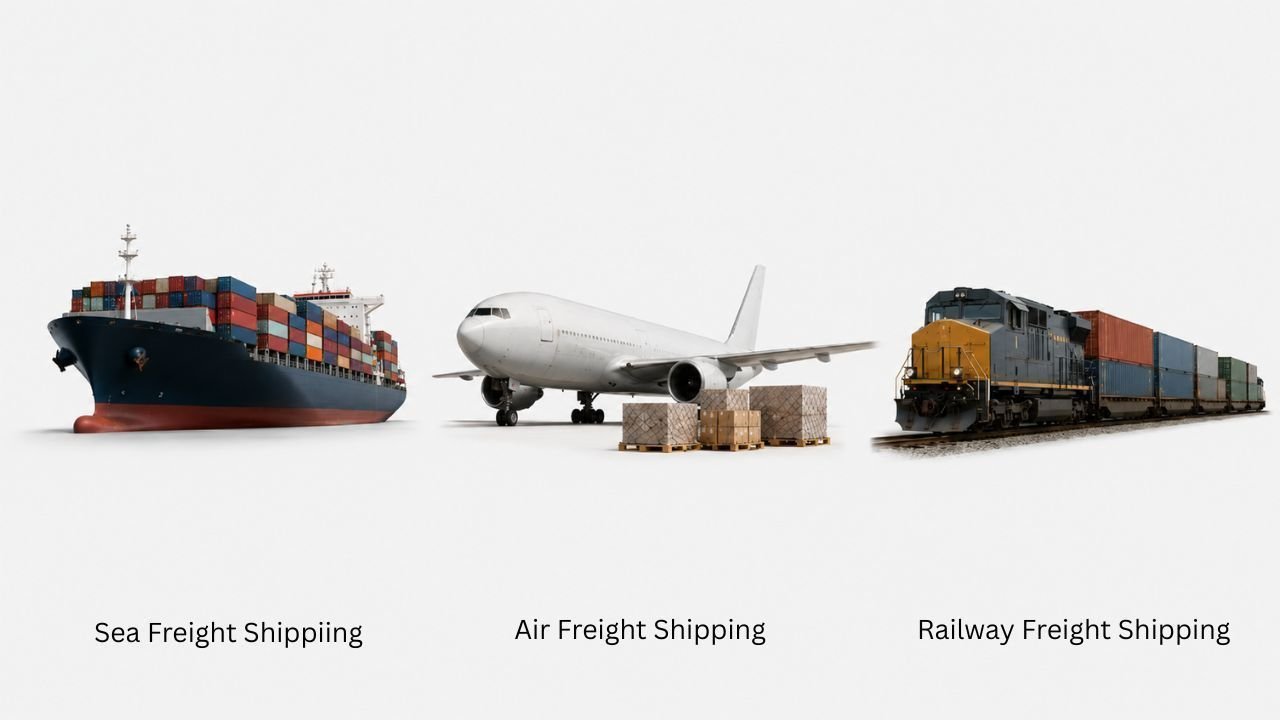
| Transportation | Air Freight | Railway Freight | Sea Freight |
| Cargo Type | Small-parcel, high-value, urgent restocks, e-commerce fast deliveries | Mid-pack, reliable restocks, balanced between time and costs | Bulk commodities, factory shipments, cost-priority products |
| Advantages | Fast transit, high safety, ideal for urgent orders | Relatively stable, faster than sea freight | Low costs, large capacity |
| Disadvantages | High costs, limited weight | Limited by transit hubs, fixed routes, and slower than air freight | Slow deliveries, affected by ports, and sensitive to congestion during peak seasons |
| Time | About 2–5 days | About 30–35 days | About 35–55 days |
| Costs | High | Medium | Low |
Cargo You Can Ship from China to Italy
- E-commerce and Retail Goods: clothing, footwear, headwear, bags, accessories, home and kitchen products, small electronics, cosmetics, personal care products, sports equipment, etc.
- Industrial and Bulk Cargo: machinery parts, hardware, tools, building materials, LED displays, automobile parts, raw industrial materials, semi-finished products, etc.
- Special Cargo (compliant with declaration): battery-powered products, wireless devices, power tools, etc.
Cargo Prohibited Shipping from China to Italy
- Flammables and Explosives: fireworks, explosives, flammable gases, etc.
- Weapons and Arms: guns, ammunition, restricted knives, military equipment, etc.
- Drugs and Restricted Chemicals: illegal drugs, psychotropic substances, unlicensed controlled medicines, etc.
- Dangerous chemicals and Liquids: corrosive liquids, dangerous industrial chemicals, non-compliant batteries, etc.
- Non-Compliant EU Imports Cargo: products without CE, EN71, or other compliance, counterfeit goods, non-compliant digital products, etc.
- Bio-Risk Cargo: untreated wood, restricted animal and plant products, bio-risk products, etc.
If you are puzzled about whether your cargo can be shipped, you can contact DFH Logistics for help. We can evaluate whether your cargo is transportable and provide you with the best transportation plan to Italy.
What Should I Prepare Before Shipping from China to Italy?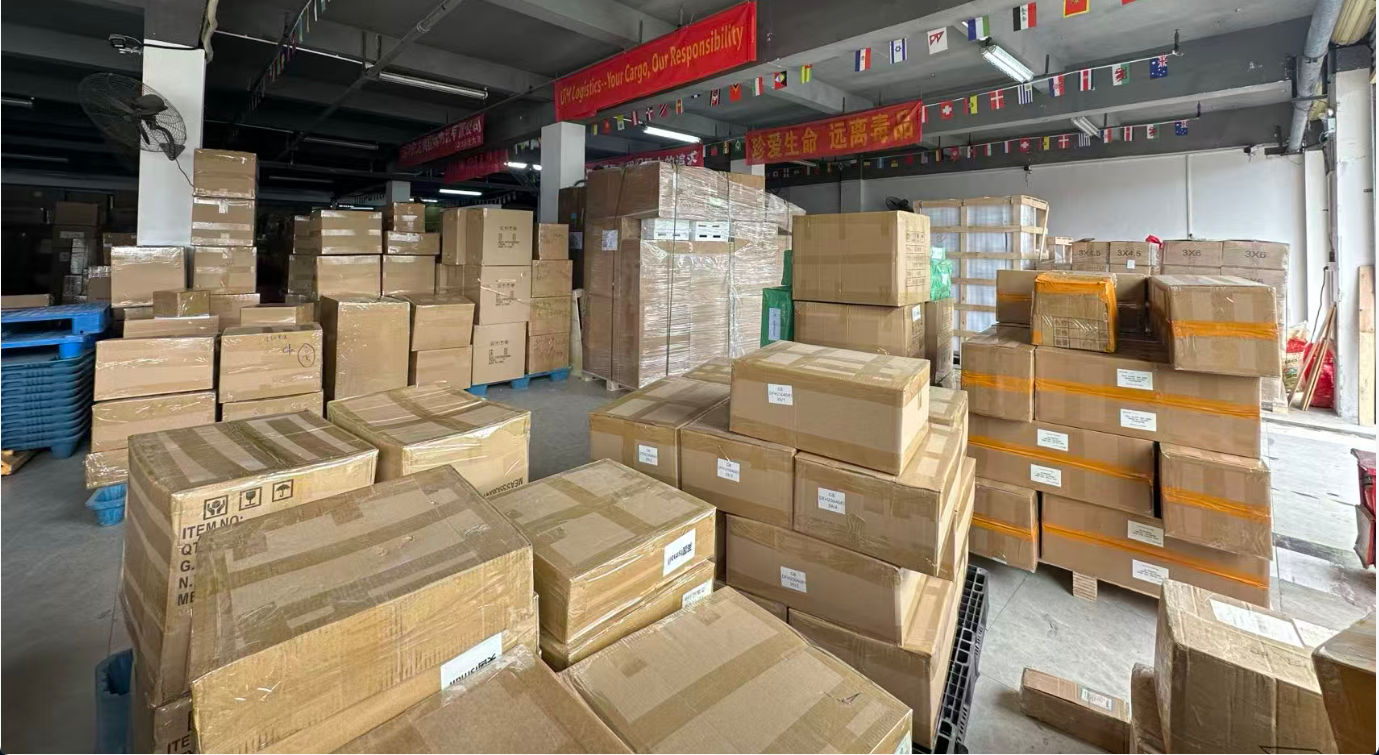
Before shipping from China to Italy, you need to prepare accurate cargo information, complete shipping documents, and make sure your products meet EU import requirements. Proper preparation can help you avoid many shipment issues before your cargo arrives in Italy.
Here is what you should prepare before your cargo leaves China:
1. Confirm Product Classification and Customs Requirements
Before shipping, you should confirm the correct HS code for your products. The HS code determines the applicable import duties, VAT rates, and whether your goods require special customs regulations.
You should also check whether your products are affected by other measures, such as EU anti-dumping duties, which may apply to certain products from China.
2. Prepare Import Registration
You need to have a valid EORI number before customs clearance. This registration number is required for businesses importing goods into the European Union.
3. Check Product Compliance and Certifications
Before shipping, you need to ensure that the products comply with Italian and EU import regulations. Products such as electronics, machinery, toys, and medical devices may require CE marking, declarations of conformity, or other compliance documents.
If your cargo uses wooden pallets, crates, or other wooden packaging, you need to ensure they meet ISPM 15 requirements. If needed you should provide a fumigation certificate.
4. Prepare Required Shipping Documents
Before your goods leave China, you need to prepare accurate shipping documents. The three essential documents are the commercial invoice, packing list, and bill of lading or air waybill.
5. Prepare for Import Duties, VAT
You should prepare for import duties and VAT payments before your cargo arrives in Italy. This helps you avoid customs delays
6. Cargo Protection
If your items are fragile or valuable, you should also consider appropriate cargo protection and insurance. Proper packaging and cargo insurance help reduce risks during transportation.
Preparing these requirements in advance can make your shipment from China to Italy smoother. If you need help with shipping documents, customs clearance, or transportation arrangements, you can contact us for professional support.
Can You Help with Amazon FBA from China to Italy?
Yes. We can provide you with a complete logistics solution from China to Amazon FBA Italy. From s
upplier pickup to final delivery, we handle every step to make your FBA shipping smoother and more convenient:
Step 1: Cargo Pickup from Your Supplier
We will pick up the goods from your supplier in China and transport them to our warehouse. If you source products from multiple suppliers, we can also pick up the goods from different locations to our warehouse.
Step 2: Cargo Inspection, Consolidation, and FBA Preparation
Once the goods arrive at our warehouse, we will inspect their condition. If needed, we can provide services such as consolidation, repackaging, and labeling to help your products meet Amazon FBA requirements.
Step 3: Choose the Right Shipping Method and Start Transportation
We will recommend the most suitable shipping method based on your shipment volume, budget, and delivery requirements. We can provide the following transportation methods: sea freight, air freight, express delivery, trucking, and rail freight.
Step 4: Customs Clearance
If you choose DDP service, we will handle the import customs clearance and related procedures after your cargo arrives in Italy. This customs support will help ensure smooth delivery to your Amazon FBA warehouse.
Step 5: Final Delivery to Amazon FBA Warehouse
After customs clearance is completed, we will arrange the final delivery to your designated Amazon FBA warehouse in Italy. You can track the shipment progress and receive your inventory without handling complicated logistics procedures.
What Happens If Italian Customs Holds My Cargo?
If Italian Customs holds your cargo, your shipment will be temporarily stopped until the customs issue is resolved. This may cause customs delays, additional storage costs, and delayed delivery. The following situations may happen after your cargo is held:
Customs Requires More Information
First, Italian customs may request additional documents or information to verify details of your goods. You may need to provide documents such as commercial invoices, packing lists, import declarations, or product certificates.
Your Goods May Be Inspected
Second, if Italian customs find unclear information or compliance issues, they may inspect your goods. They may check product descriptions, declared value, labels, or whether the goods comply with EU import requirements.
You May Need to Provide Additional Cargo Information or Documents.
If customs finds any missing or unclear information, you may need to provide additional cargo details or supporting documents. Therefore, providing accurate information as early as possible helps avoid long delays.
Your Cargo May Face Delays or Additional Costs
Finally, if the problem cannot be resolved quickly, your cargo may be detained, incurring additional costs such as storage fees, inspection fees, or delayed delivery. In serious cases, the cargo may be refused or returned.
If you do not want your cargo to be held by Italian Customs, you should prepare accurate shipping documents and correct cargo information in advance. If you need help with customs clearance or shipping from China to Italy, you can contact us for professional support.
What Products Are Frequently Delayed by Italian Customs?
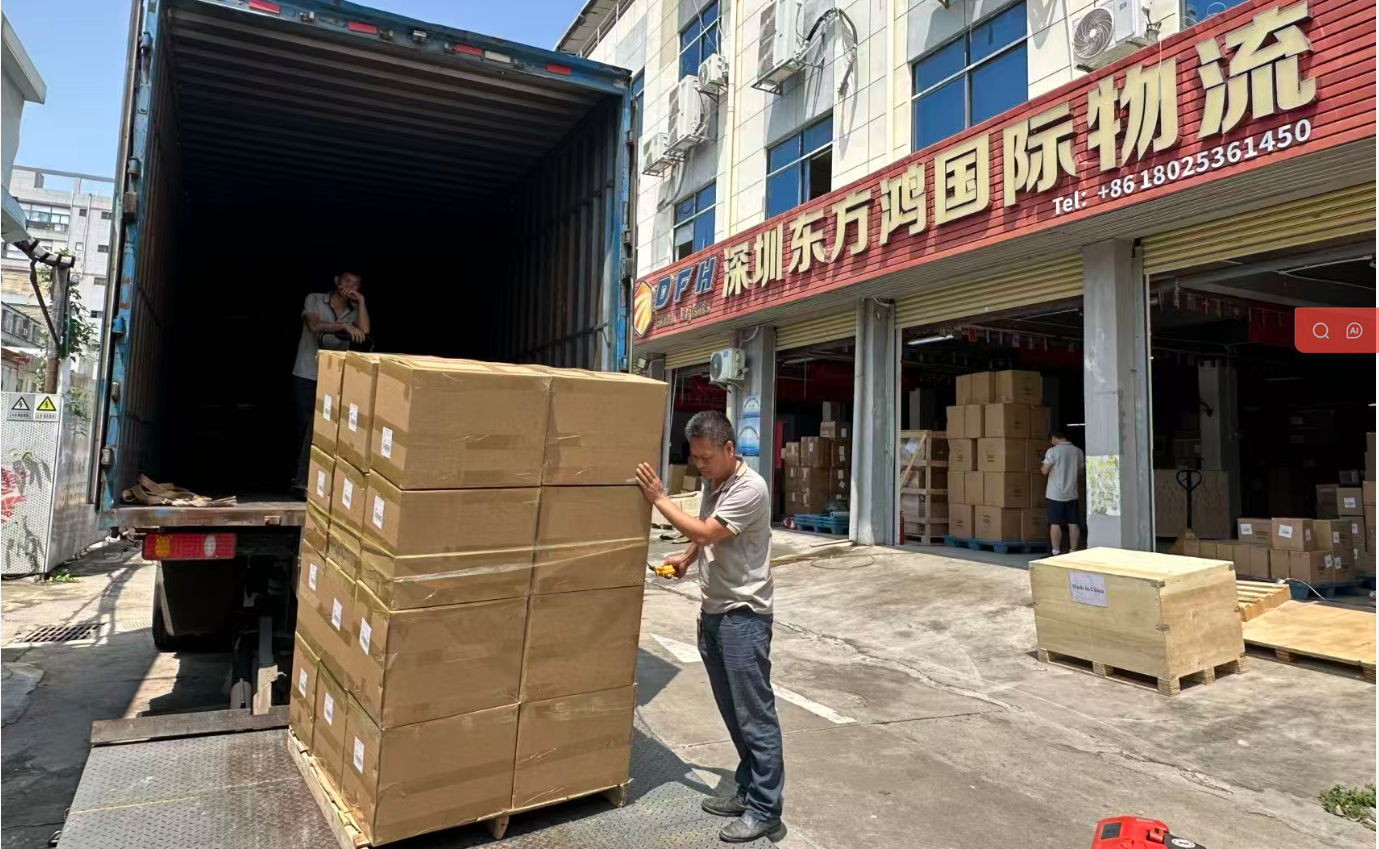
Italian Customs checks some products more strictly, such as electronics, machinery, and medical devices. These products usually require additional documents, certifications, or safety approvals. Without the required paperwork, your cargo may face customs delays or additional inspections.
Common Products with Strict Customs Requirements:
| Product Type | Examples | Why They May Be Delayed |
| Electronics and Electrical Products | Smartphones, laptops, LED lights, chargers, electronic accessories | May require CE marking and compliance documents. |
| Machinery and Industrial Equipment | Production machines, power tools, mechanical parts, industrial equipment | May need safety certificates and technical documents. |
| Medical Devices and Healthcare Products | Medical equipment, diagnostic devices, healthcare supplies | Require specific approvals and import documents. |
| Toys and Children’s Products | Toys, baby products, children’s furniture, educational products | Need to meet EU safety requirements. |
| Food and Agricultural Products | Food products, plants, seeds, animal-based products | Require health certificates and inspections. |
| Cosmetics and Personal Care Products | Skincare products, makeup, beauty devices, personal care items | Need ingredients and safety information. |
| Wood & Raw Timber Products | Wooden furniture, raw timber, or cargo packed in heavy wooden crates | Must meet ISPM 15 requirements. |
| Branded and High-Value Goods | Designer bags, watches, branded electronics, luxury products | May face authenticity and trademark checks. |
Which Shipping Method Is Best for Amazon FBA Italy?
For Amazon FBA Italy, the best shipping method depends on your inventory levels, replenishment urgency, and cost requirements. You need to choose different transportation methods based on your own needs.
The common options for Amazon FBA shipments from China to Italy include:
- Express delivery: Best suited for small batches of goods, samples, and urgent inventory replenishment. It’s the fastest, but usually more expensive.
- Air freight: Suitable for high-value products or goods requiring rapid replenishment. Air freight is cheaper than express delivery.
- Rail transport: Suitable for regular inventory replenishment. It’s a balanced option between speed and cost.
- Sea freight: Best for large shipments when you want to save on shipping costs. It is the most affordable option, but it takes more time for delivery.
Is Rail Freight Stable from China to Italy?
Yes. Because rail freight typically follows fixed routes and timetables, delivery times are more predictable. Compared to sea freight, rail freight is less affected by port delays.
Goods usually originate from major rail cities in China, such as Xi’an, Chengdu, Chongqing, and Yiwu. The goods would then travel through Europe and eventually arrive in Italy.
If you are looking for a stable and cost-effective rail freight service from China to Italy, feel free to contact us for a customized shipping solution.