China offers a huge range of baby bodysuits, sleepsuits, rompers, bibs, hats, socks, jackets and seasonal sets. The attractive factory price is only the beginning, though. With baby clothing, a loose button, an inaccurate fibre claim or a missing safety document can become a much bigger problem after the cartons have left the factory.
You can make importing baby clothes from China much smoother by treating the shipment as both a product-compliance project and a logistics project. We can help you organize the product information, compare shipping options and keep the paperwork aligned with the goods that actually arrive.
What Makes Baby Clothing Imports Different from Ordinary Apparel?
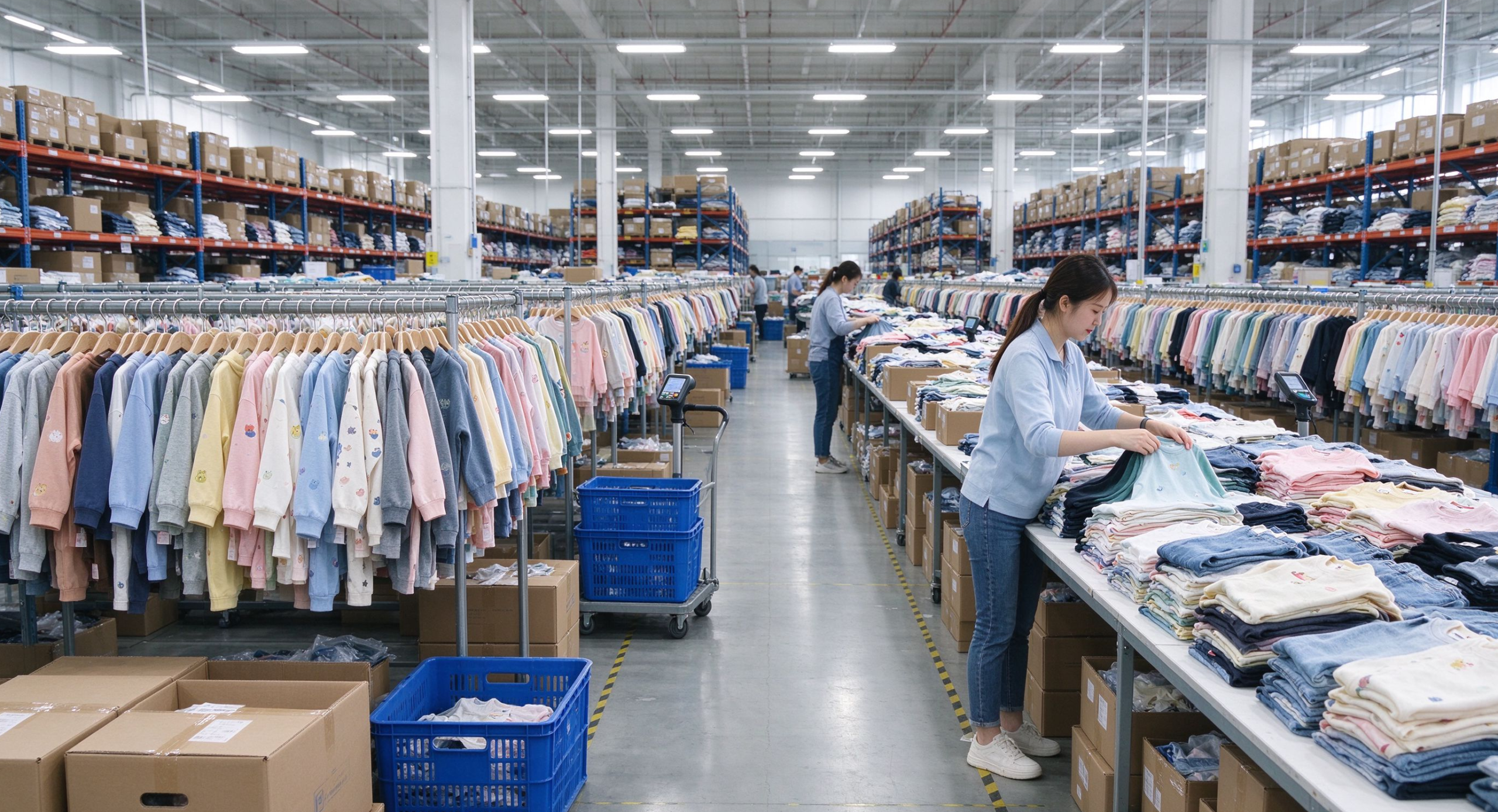
Baby clothing needs a closer review because the end user is more vulnerable, and several markets apply extra rules to children’s products, sleepwear, trims and chemical content.
Before you request a freight quote, clarify:
- The intended age range and size system
- Whether the garment is daywear, sleepwear, outerwear or a costume
- Fibre composition, fabric weight, finish and colourway
- Buttons, snaps, zippers, cords, appliqués, prints and decorative parts
- Whether the garment includes a toy, teether, rattle, magnet or other attached item
- The country or countries where you will sell the goods
Do not describe every item as simply “baby clothes.” A cotton bodysuit, a fleece sleepsuit and a hooded jacket can have different classification, testing and labelling considerations. The product description used for the quote, invoice, test report and customs declaration should tell the same story.
Build a Product Compliance File Before You Order
Before placing a bulk order, ask your supplier to prepare a product information file for each baby clothing style. Having these details ready early makes it easier for you to check product requirements, arrange testing, and prepare shipping documents before the goods are packed.
Create One File for Every Style
For each style, keep a record of the style number, age range, size chart, fibre percentages, fabric construction, colours, trims, care instructions, country of origin, and intended use. You should also save product photos and the approved sample in the same file.
If your supplier changes the fabric, buttons, or other trims during production, ask them to update the product information. You should also check whether the previous test reports still apply to the revised product.
Review Testing Before Bulk Production
The tests your baby clothes need depend on the destination market and garment type. Common checks may include:
- Fibre Composition: Confirm that the declared material matches the actual fabric.
- Colourfastness: Check whether colours remain stable during washing and use.
- Dimensional Stability: Review whether garments shrink or change shape after washing.
- Restricted Substances: Check for chemicals that may be restricted in your destination market.
- Flammability: Pay particular attention to sleepwear and other garments subject to specific safety rules.
- Attached Components: Make sure buttons, snaps, and decorative parts are securely fixed.
If you are importing sleepwear, hooded garments, or clothing with small decorative parts, arrange the relevant safety checks before approving bulk production.
Ask Your Supplier for Test Evidence
Do not rely only on your supplier’s statement that the products meet export quality standards. Ask for the laboratory name, test date, sample description, fabric composition, and report number so you can verify whether the evidence matches your actual order.
Before booking transportation, contact us to compare your approved product information with the available shipping documents, identify missing cargo details, and confirm the necessary information with your supplier before shipment.
Which Documents Are Needed for Customs Clearance?
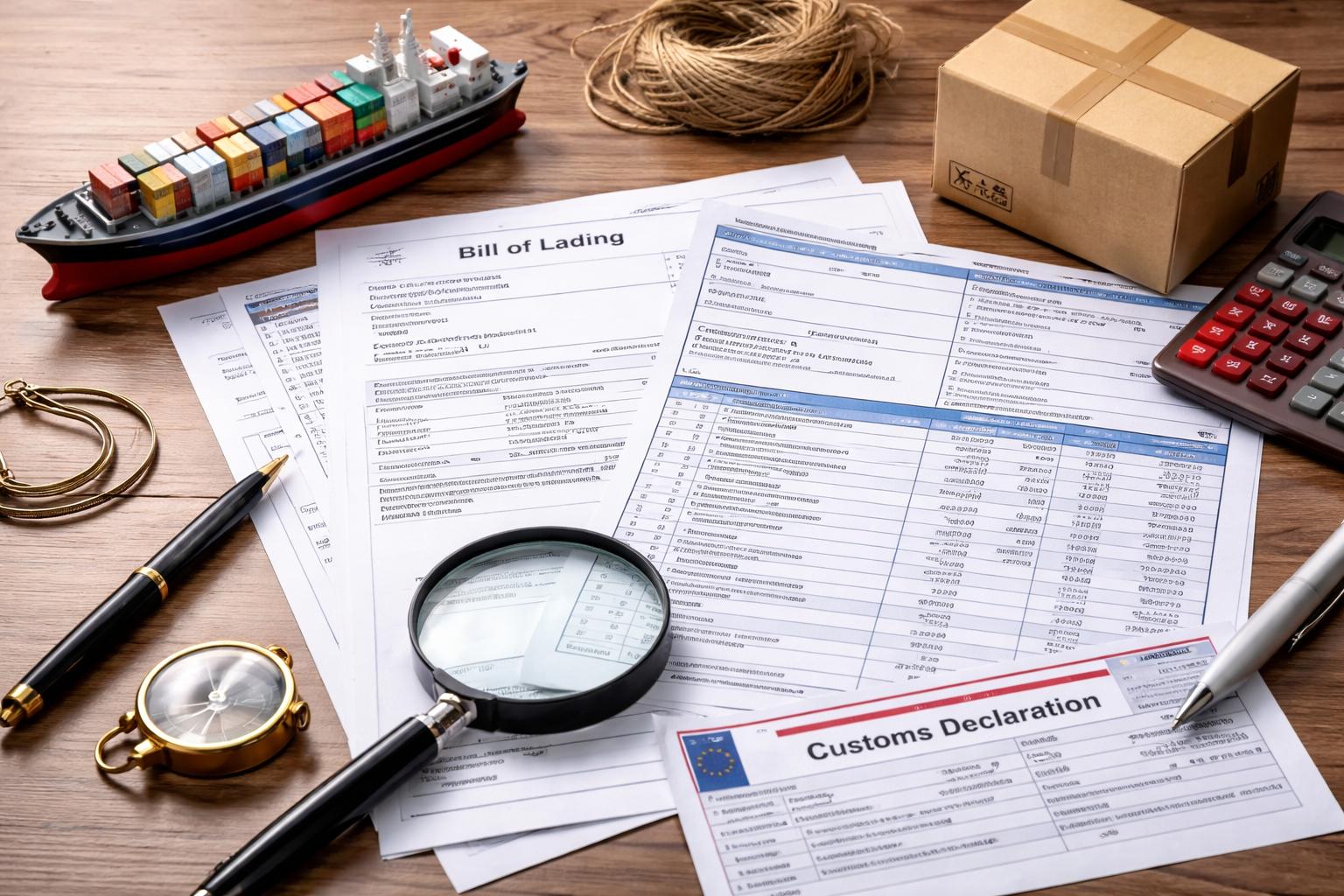
Yes. A normal commercial shipment usually needs a commercial invoice, packing list, transport document, accurate HS classification, country of origin and importer information. Product compliance records may also be requested when the goods are regulated or inspected.
Core Customs Documents
- Commercial invoice showing the seller, buyer, description, quantity, unit value, total value, currency and Incoterm
- Packing list showing carton numbers, garment styles, quantities, net weight, gross weight and package dimensions
- Bill of lading or air waybill with the correct shipper, consignee and routing
- Import declaration prepared by the importer or appointed customs representative
- HS code and country-of-origin information for each product group
- Test reports, certificates, permits or compliance records when required by the destination
Keep the invoice and packing list practical. “Baby garments” is too broad for a mixed shipment. Use descriptions such as “100% cotton knitted infant bodysuits, sizes 0–12 months” when that is accurate. Do not undervalue the shipment or call commercial stock a gift or personal effects.
Destination-Specific Records
For the United States, children’s products may require testing by a CPSC-accepted third-party laboratory and a Children’s Product Certificate. Clothing labels also need to match the relevant fibre, care, origin and tracking information. If cotton or other materials create a supply-chain concern, keep purchase orders, mill information and origin records available; the CBP UFLPA overview explains the forced-labour import issue.
For the UK, confirm the commodity code, importer details, VAT and customs declaration requirements. Baby garments and sleepwear need careful classification; the UK textile apparel classification guidance explains why product design and intended use matter.
For the EU, the importer should review fibre names and composition labelling, product safety, REACH restrictions and children’s clothing standards. The EU childrenswear compliance guidance is a useful starting point, but the importer remains responsible for checking the current rules in the destination member state.
For Canada, fibre disclosure and textile labelling should be reviewed before shipment, and children’s sleepwear has separate flammability requirements. The Canada textile labelling guide explains the basic labelling framework.
For Australia, children’s nightwear can be subject to mandatory safety requirements and warning labels. The Australian children’s nightwear guide is relevant when the order includes pyjamas, onesies or other sleepwear.
If you are not sure which documents you need to ship baby clothes from China, you can send us your product type, fabric composition, supplier details, and destination country. We can help you identify the required shipping documents, check key customs information, and coordinate a suitable shipping solution.
Labels, Trims and Packaging Need a Second Review
Many problems are created at the sewing and packing stage, when a product is already too expensive to change. Review the label artwork and package specification while the supplier can still correct them.
Fibre, Care and Origin Information
Make the fibre composition accurate and consistent across the sewn-in label, hangtag, online listing, invoice and test report. Care instructions should reflect the actual fabric and finish. Use the destination market’s accepted fibre names and language requirements rather than copying a supplier’s domestic label.
Buttons, Snaps, Cords and Decorative Parts
Pull buttons and snaps by hand, inspect seams, and check that decorative pieces cannot easily detach. Avoid cords around the neck and hood area unless the destination requirements have been reviewed. If a garment includes magnets, batteries or toy-like attachments, it may trigger rules beyond ordinary clothing.
Sleepwear Is a Separate Risk Category
Do not assume that a garment is ordinary daywear because the supplier calls it a “lounge set.” A loose fit, night-time design, matching top-and-bottom set or sleep bag can change the safety review. Ask the destination compliance specialist or testing laboratory to confirm the category before production.
Carton Marks and Inner Packaging
Use clean, dry cartons and keep the carton quantity consistent with the packing list. For baby clothes, avoid strong odours, loose fibres and dirty recycled packaging. If you use wooden pallets or crates, check the destination’s treatment and marking rules before loading.
If you need help checking your baby clothing shipment before it leaves China, contact us with your product details, label information, and packaging requirements. We can communicate directly with your supplier, arrange warehouse receiving and cargo checks, and help coordinate the shipping process to your destination.
How Should You Choose Sea, Air, Rail, Express or Trucking?
For small samples, air or express is usually practical; for regular commercial stock, sea freight is often the lowest-cost choice; for UK and European replenishment, rail and China–Europe trucking can provide useful middle options when sea is too slow.
| Shipping Method | Best Fit | Door-to-Door Estimate | Practical Note |
| Sea LCL | Small and mixed commercial orders | 25–50 days | Lower entry cost, but consolidation and destination handling need checking. |
| Sea FCL | Large, stable inventory | 25–50 days | More control when the cargo can use a full container. |
| Air Freight | Urgent replenishment and launch stock | 5–12 days | Volumetric weight can affect the billable weight. |
| Express | Samples and very small cartons | 3–7 days | Fastest for small shipments; oversized cartons can cost more. |
| Rail Freight | UK and European replenishment | 18–35 days | A useful middle option when the sea is too slow and air is too expensive. |
| Truck Freight | Flexible UK/EU door-to-door delivery | 18–35 days | Border controls, capacity and final postcode affect the schedule. |
Rail and trucking are lane-dependent. Rail normally moves through a China–Europe service network and then requires a European or UK delivery plan. China–Europe trucking can offer flexible door-to-door routing, but border procedures, vehicle capacity, road restrictions and final postcode affect the real schedule.
You can provide us with the supplier city, carton count, total weight, CBM and destination postcode. We will compare sea, air, rail, trucking and express according to the actual shipment rather than choosing a method from the product name alone.
How Long Does It Take to Ship Baby Clothes from China?
The delivery time for baby clothes depends on your destination and shipping method. The following table shows estimated Door-to-Door transit times for nine major shipping markets.
| Shipping Route | Sea | Rail | Truck | Air | Express |
| China to USA | 16–30 days | — | — | 5–14 days | 3–7 work days |
| China to Europe | 30–50 days | 25–35 days | 20–30 days | 6–14 days | 3–7 work days |
| China to UK | 30–40 days | 28–32 days | 20–28 days | 6–14 days | 3–7 work days |
| China to Canada | 20–45 days | — | — | 6–14 days | 3–7 work days |
| China to Australia | 20–25 days | — | — | 5–12 days | 3–7 work days |
| China to UAE | 20–30 days | — | — | 5–14 days | 2–6 work days |
| China to South Africa | 45–50 days | — | — | 8–15 days | 5–7 work days |
| China to Singapore | 10–12 days | — | — | 2–5 days | 2–4 work days |
| China to Thailand | 10–12 days | — | 5–10 days | 2–3 days | 2–6 work days |
These are planning estimates, not guaranteed transit times. Production, inspection, warehouse receiving, export clearance, port handling, customs inspection and final delivery are separate parts of the calendar. Peak seasons, holidays, vessel changes, border congestion and remote delivery can add time.
If you have a specific arrival deadline for your baby clothing inventory, share your cargo-ready date with us. We can help compare available routes and recommend a suitable shipping schedule.
What Is the Shipping Cost for Baby Clothes from China?
Shipping costs depend on your destination, carton dimensions, total volume, chargeable weight, and transportation method. The following table provides indicative freight rates for different shipping routes.
| Shipping Route | Sea Freight (LCL / FCL) | Rail | Truck | Air | Express |
| China to USA | LCL: US$100–250/CBM FCL: US$1,500–4,500/cont. | — | — | US$7–12/kg | US$7–28/kg |
| China to Europe | LCL: US$80–180/CBM FCL: US$1,500–5,000/cont. | US$1–3/kg | US$2–5/kg | US$5–9/kg | US$6–25/kg |
| China to UK | LCL: US$100–200/CBM FCL: US$1,800–5,000/cont. | US$1–3/kg | US$2–5/kg | US$5–9/kg | US$6–25/kg |
| China to Canada | LCL: US$100–220/CBM FCL: US$2,000–5,000/cont. | — | — | US$4–10/kg | US$7–28/kg |
| China to Australia | LCL: US$80–180/CBM FCL: US$1,500–4,000/cont. | — | — | US$5–12/kg | US$8–30/kg |
| China to UAE | LCL: US$80–160/CBM FCL: US$1,200–3,500/cont. | — | — | US$4–13/kg | US$5–20/kg |
| China to South Africa | LCL: US$120–250/CBM FCL: US$2,500–6,000/cont. | — | — | US$7–22/kg | US$8–32/kg |
| China to Singapore | LCL: US$50–120/CBM FCL: US$800–2,000/cont. | — | — | US$2–8/kg | US$5–15/kg |
| China to Thailand | LCL: US$50–120/CBM FCL: US$800–2,000/cont. | — | US$1.5–4/kg | US$3–5/kg | US$0.8–3/kg |
Note: These are indicative freight references, not fixed quotations. Freight is only one part of the landed cost. Add supplier pickup, export handling, consolidation, testing, insurance, customs duty, import VAT or sales tax, destination handling, storage and final delivery where applicable. A door-to-door quote may include some of these items, but you should ask for a written list of inclusions and exclusions.
If you need a shipping quote for your baby clothes, send us your supplier city, destination postcode, carton quantity, dimensions, gross weight, total CBM, and cargo value. We can compare available shipping methods and help arrange a suitable Door-to-Door shipping solution for your baby clothing orders.
What Can Delay a Baby Clothing Shipment from China?
Most delays come from mismatched product information, not from the ocean or aircraft itself. The common warning signs are:
- The fibre composition on the label does not match the invoice or test report
- The supplier changes fabric, colour, trim or size after testing
- Sleepwear is declared as ordinary daywear without a category review
- Carton counts, weights or dimensions are different from the packing list
- The importer, consignee or tax information is incomplete
- Customs value is unusually low or the description is too vague
- A certificate, CPC, test report or origin record cannot be connected to the actual style
- The delivery postcode needs an appointment, remote-area service or special unloading
A final pre-shipment check is much cheaper than relabelling thousands of pieces after arrival. You can send us the product sheet and draft shipping documents, and we will help identify obvious inconsistencies before booking.
Our Real Case Studies: Importing Baby Clothes from China
Case Study 1: Shipping Baby Clothes (1,690 KG, 70 Cartons) from Guangzhou to Manchester by Rail Freight DDP
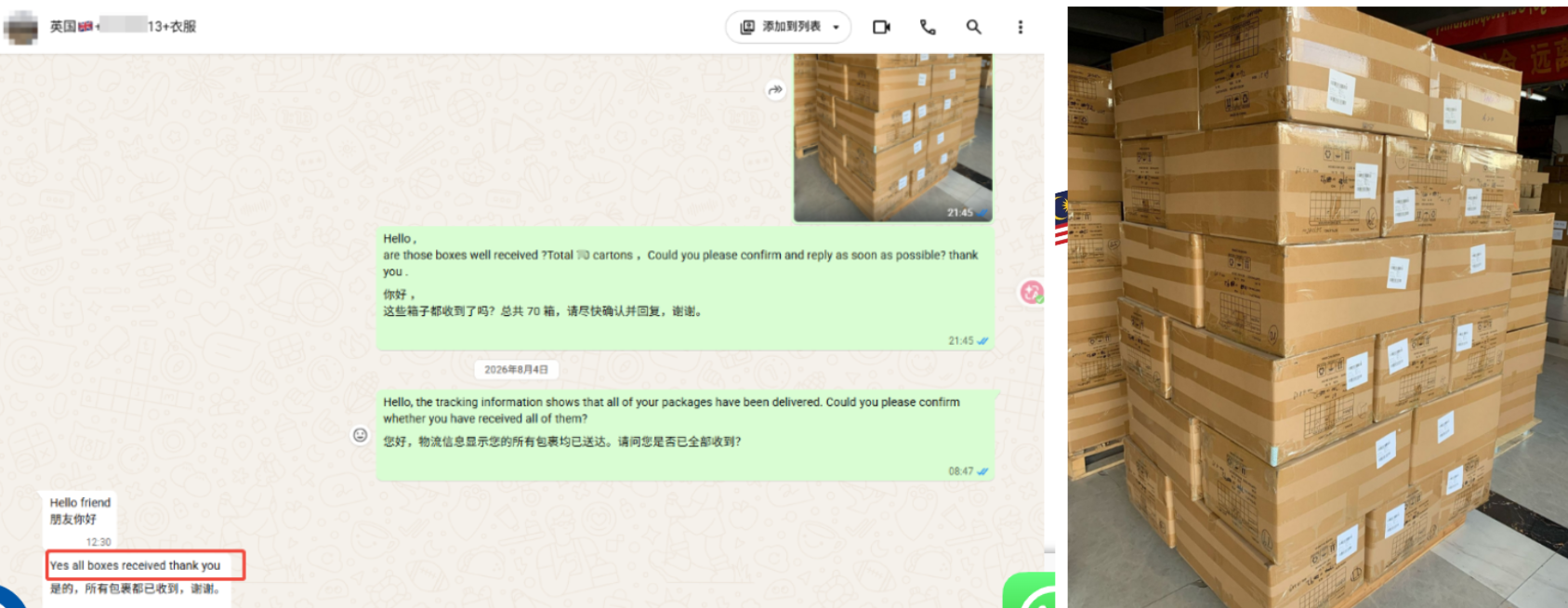
Customer Source: Customer Referral
Cargo Type: Baby Clothes
Chargeable Weight: 1,690 KG
Cargo Quantity: 70 Cartons
Shipping Route: Guangzhou, China to Manchester, UK
Shipping Method: Rail Freight DDP Door-to-Door
Transit Time: Approximately 33 Days
The customer purchased baby clothes from a supplier in Guangzhou and needed a reliable shipping solution to the UK. He wanted to compare air and rail freight costs, understand import duties and taxes, and avoid arranging domestic transportation and customs clearance themselves.
- Supplier Pickup & Warehouse Receiving: We arranged pickup directly from the supplier in Guangzhou and transported all 70 cartons to our Shenzhen warehouse. Our team checked the cargo information and confirmed the final chargeable weight before shipment.
- Air and Rail Freight Comparison: We provided quotations for both air and rail freight. After comparing the costs and estimated transit times, the customer selected rail freight as a more economical option for his budget and delivery requirements.
- Cargo Insurance: We offered cargo insurance at 0.05% of the declared cargo value(US$3,558.36). The calculated premium was approximately US$1.78, but the minimum charge at that time was RMB 80 per shipment. The final insurance fee was RMB 80.
- Rail Freight DDP Arrangement: We arranged Rail Freight DDP Door-to-Door from China to the UK, coordinating international transportation and the agreed destination service
- Customs Clearance: Under the agreed DDP terms, we handled import customs clearance and applicable duties and taxes, allowing the customer to avoid managing complicated import procedures himself.
- Final Door-to-Door Delivery: After customs clearance, we arranged local transportation and delivered the baby clothes directly to the customer’s address in Manchester.
The 70 cartons of baby clothes were successfully delivered to Manchester within approximately 33 days. The customer was satisfied with the cost-effective rail freight solution, clear insurance charges, and convenient DDP Door-to-Door service.
Case Study 2: Shipping Baby Clothes (3,303 KG, 231 Cartons) from China to USA by Sea Freight DDP
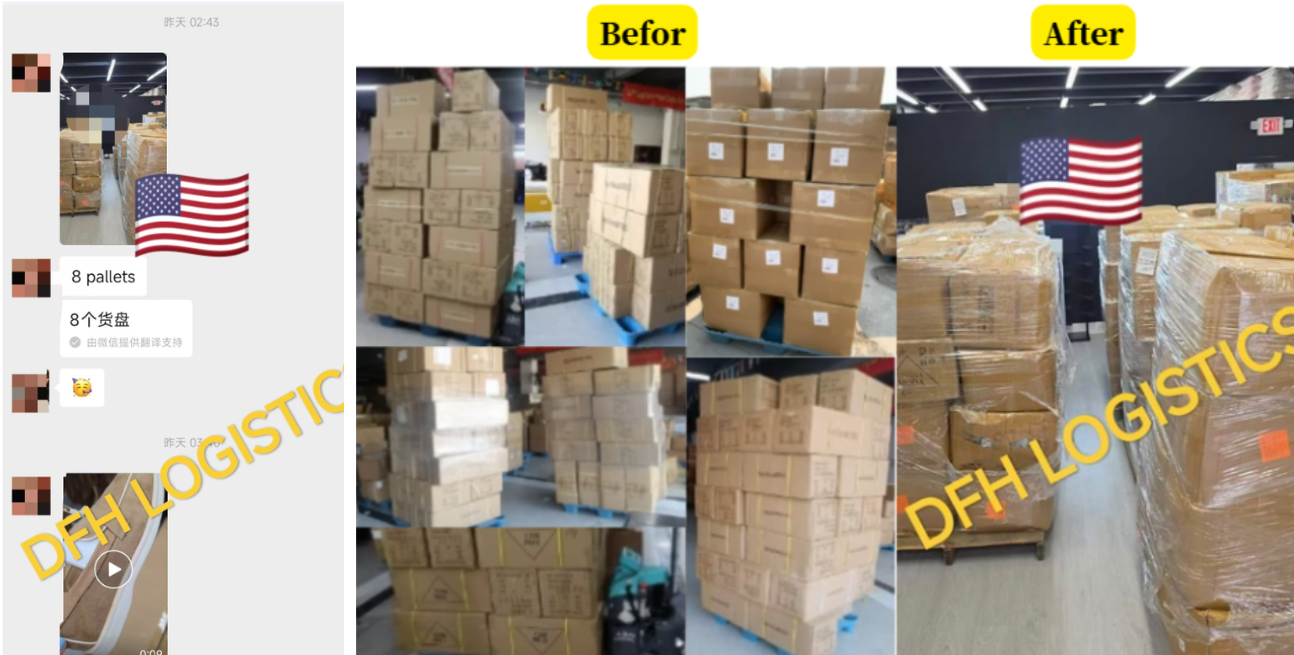
Customer Source: DFH Freight Website Inquiry
Cargo Type: Baby Clothes
Chargeable Weight: 3,303 KG
Cargo Quantity: 8 Pallets (231 Cartons)
Shipping Route: China to USA
Shipping Method: Sea Freight DDP Door-to-Door
Transit Time: 40 Days After Departure
The customer was a US-based business owner who had recently launched an online store. As she was relatively new to importing baby clothes from China, she needed guidance on coordinating multiple suppliers, preparing shipping documents, and handling US customs clearance. She wanted a convenient shipping solution that covered the entire process from China to her address in the USA.
- Multi-Supplier Cargo Consolidation: We collected baby clothes from different suppliers and received them at our Shenzhen warehouse. After all 231 cartons arrived, our team checked the quantities and consolidated the goods into one shipment of 8 pallets.
- Cargo Inspection & Reinforced Packaging: We checked the cargo quantities and visible packaging conditions. Based on the shipment requirements, we arranged reinforced packaging to improve protection during ocean transportation and reduce the risk of damage during handling.
- Supplier Coordination & Document Support: We communicated directly with the customer’s suppliers to confirm product information and collect the necessary shipping documents. We also checked the cargo details and documentation before arranging the shipment.
- Sea Freight with DDP Arrangement: Based on the total chargeable weight of 3,303 KG, we arranged Sea Freight DDP Door-to-Door from China to the USA. This allowed the customer to ship all her baby clothing orders together under one coordinated arrangement.
- US Customs Clearance: Under the agreed DDP terms, we handled US import customs clearance and applicable duties and taxes, saving the customer from managing complicated import procedures herself.
- Final Door-to-Door Delivery: After customs clearance, we arranged local transportation and delivered the 8 pallets directly to the customer’s designated address in the USA.
The shipment was successfully transported to the USA within 40 days after departure. The customer was highly satisfied with our multi-supplier consolidation, document support, and convenient DDP Door-to-Door service. She also expressed interest in continuing to work with us on future shipments.
Planning to import baby clothes from China to the USA? Send us your supplier locations, carton quantity, cargo weight, and delivery postcode. We can coordinate directly with your suppliers, consolidate your orders, and arrange Sea Freight DDP Door-to-Door delivery.
FAQ about Importing Baby Clothes from China
Where Can I Buy Baby Clothes in Bulk from China?
You can source baby clothes in bulk directly from Chinese garment manufacturers, wholesale markets, and B2B platforms such as 1688 and Alibaba. When choosing a supplier, compare minimum order quantities, fabric quality, sample availability, production capacity, and export experience. You can also explore our China clothing wholesale suppliers list to find potential sourcing options.
Can I Combine Orders from Several Chinese Factories?
Yes. We can receive goods from multiple suppliers at a China warehouse, check the cartons and consolidate them into one shipment. Ask each supplier to use clear style numbers and carton marks so the combined packing list remains accurate.
Do Baby Clothes Need Product Testing Before Importing from China?
It depends on your destination country and the type of baby clothing you import. Certain garments may require testing for fibre composition, restricted chemicals, flammability, or small attached components. Check the applicable safety requirements before bulk production so you can address potential issues before your order is ready for shipment.
Can a Freight Forwarder Inspect and Repack Baby Clothes Before International Shipping?
Yes. We can receive your baby clothing orders at our Shenzhen warehouse, count the cartons, check visible packaging conditions, and arrange consolidation, repacking, or relabelling when needed. We can also help compare cargo information with your shipping documents. However, product safety testing, certification, and regulatory compliance remain the responsibility of the manufacturer, seller, and importer.
Final Thoughts
To import baby clothes from China successfully, connect the product specification, testing plan, labels, customs documents and shipping route before the cartons leave the factory. Once the destination is clear, you can choose a method that balances safety, speed, cost and delivery control.
You can provide us with your garment details, supplier city, package information, target market and destination postcode. We will help you compare the available routes and prepare a practical plan for importing baby clothes from China.